
How to Prevent Veneer Buckling and End Splitting During the Drying Process
Technical troubleshooting guide for plywood mills: causes of wavy veneer, buckling, and end splits during jet drying, and how to optimize temperature, humidity, and roller pressure.
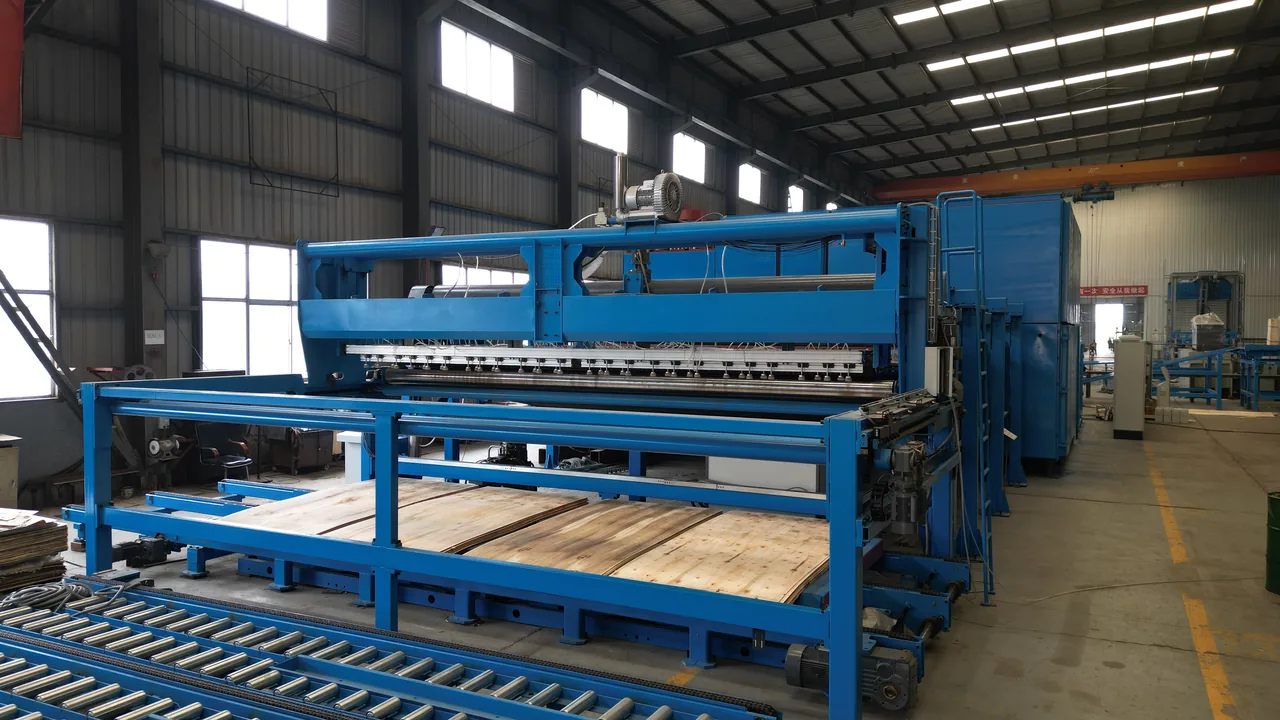
In industrial plywood manufacturing, encountering wavy edges, severe surface buckling, and longitudinal end splits on dried veneer is among the costliest quality failures a mill can suffer. Distorted sheets cannot stack evenly, jam automatic vacuum stackers, absorb excessive resin during glue spreading, and create internal voids and weak bond lines in finished plywood panels.
Wood shrinkage during drying is anisotropic: tangential shrinkage is roughly double radial shrinkage, and longitudinal shrinkage is negligible. When uneven drying creates moisture gradients between the veneer edges and center, severe internal stresses buckle the sheet.
This guide outlines the primary root causes of veneer buckling and provides concrete engineering protocols to achieve flat, dimensionally stable dry sheets across continuous roller and mesh drying lines.
1. The 4 Root Causes of Veneer Buckling and Warping
1. Excessive Drying Temperature in the Entry Zone
When green veneer (often at 60%–120% initial moisture content) enters an excessively hot initial zone (above 190°C), free water on the outer surfaces flashes into steam too rapidly while the internal core remains saturated. This severe moisture gradient produces a "case-hardening" effect that forces the sheet to curl along its grain.
2. Uneven Air Jet Velocity Across the Deck Width
In older or poorly calibrated dryers, air nozzles near the chamber center deliver higher static pressure than those near the drive walls. The center of the sheet dries faster than the edges, causing the edges to buckle into wave patterns (commonly known as "ruffled edges").
3. Insufficient or Inconsistent Roller Restraint Pressure
In a roller veneer dryer, the upper steel rollers must maintain uniform contact pressure across the entire working width. If bearings are worn, springs are fatigued, or thermal expansion has warped the roller shaft, sheets pass through without adequate physical restraint, allowing fibers to curl freely.
4. Over-Drying Below the Fiber Saturation Point
Once veneer drops below 6% moisture content, wood fibers become brittle and lose their natural elasticity. Small internal stresses that would normally relax naturally will instead rupture the wood grain, creating jagged end cracks and splits.
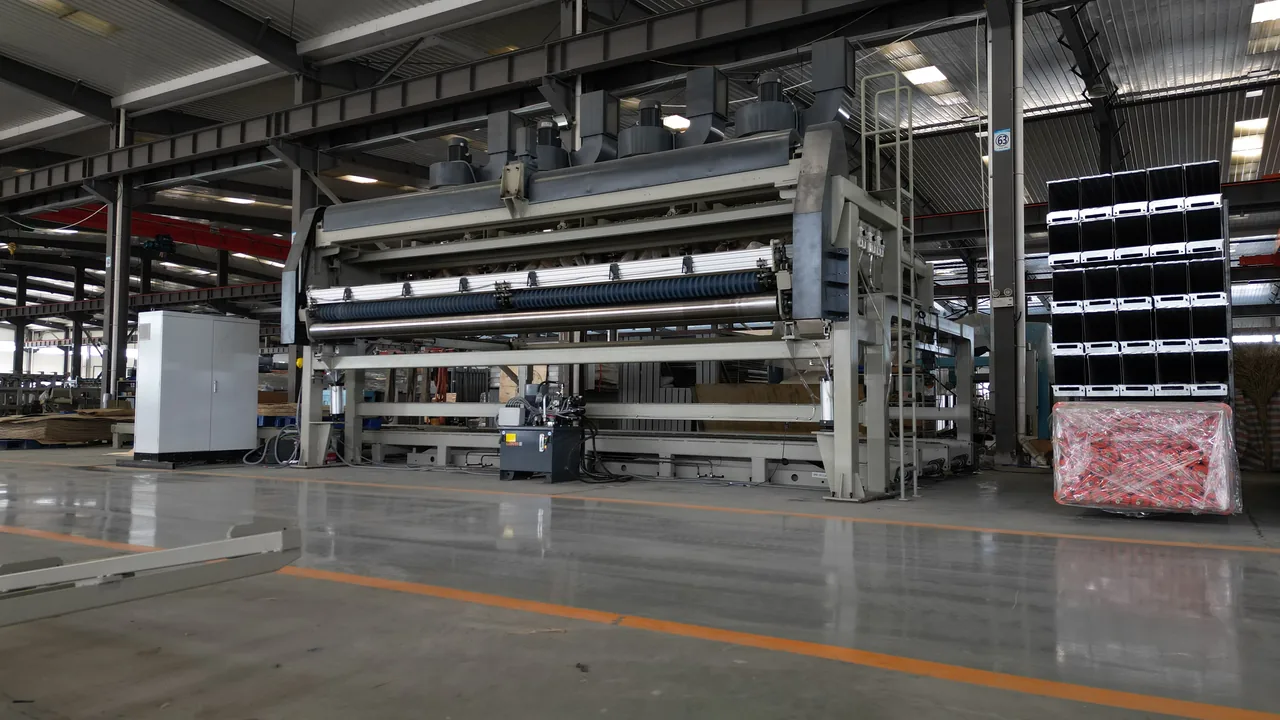
2. 5 Engineering Solutions to Guarantee Flat Dry Veneer
Protocol 1: Implement Multi-Zone Temperature Stepping
Rather than maintaining a flat temperature profile throughout the machine, divide the drying tunnel into distinct thermodynamic zones:
- ✓Zone 1 (Pre-Heating & Free Water Evaporation): 160°C – 175°C with moderate air speed to warm the wood core evenly without blistering.
- ✓Zone 2 & 3 (Main Bound Water Evaporation): 170°C – 185°C with maximum jet velocity (30 m/s) to rapidly extract moisture.
- ✓Zone 4 (Equalization Zone): 130°C – 145°C to allow internal moisture redistribution and relieve residual drying stresses.
- ✓Cooling Section: Ambient fresh air to bring veneer temperature below 45°C before discharge. Warm veneer stacked directly will continue sweating, re-absorbing ambient moisture and warping in the pile.
Protocol 2: Calibrate Upper Roller Clamping and Alignment
- ✓Inspect roller-to-roller clearances monthly using precision feeler gauges.
- ✓For thin face veneers (0.3–0.6 mm), reduce upper roller gravitational load or switch to a hybrid mesh-belt carrier.
- ✓For heavy structural core veneers (2.0–3.6 mm), ensure top rollers exert sufficient downward pressure to iron out natural growth tensions.
Protocol 3: Maintain Proper Chamber Humidity and Exhaust Balance
Drying too dry air is counterproductive. By controlling fresh air intake dampers and moist exhaust recirculators, maintain chamber relative humidity high enough during the first third of the dryer to prevent rapid surface skinning.
Protocol 4: Log Steaming / Conditioning Prior to Peeling
Veneer quality is determined upstream at the spindleless rotary peeling lathe. Logs with high internal growth stresses (such as eucalyptus or beech) should be soaked in warm water ponds (50°C–65°C) or steamed prior to debarking in your hydraulic log debarker. Softened lignin allows smooth cutting with minimal lathe knife check marks, which are the primary nucleation sites for drying splits.
Protocol 5: Integrate Real-Time Moisture Sorting at the Outfeed
Install an in-line contact or infrared veneer moisture meter immediately following the cooling deck. Automatically classify discharged sheets into:
- ✓Target Moisture (8%–12%): Direct route to glue spreading and pre-pressing.
- ✓Wet / Under-Dried (>14%): Automatically diverted for a short re-drying cycle.
- ✓Over-Dried (<6%): Routed to low-stress interior core layers.
3. Recommended Drying Parameters by Common Timber Species
| Timber Species | Green Moisture | Target Final Moisture | Infeed Zone Temp | Outfeed Zone Temp | Recommended Dryer Type |
|---|---|---|---|---|---|
| Eucalyptus (Grandis / Urophylla) | 85% – 110% | 8% – 10% | 165°C | 135°C | Heavy 4-Deck Roller Dryer |
| Rubberwood | 70% – 90% | 9% – 11% | 160°C | 130°C | Roller or Mesh-Roller Hybrid |
| Radiata / Russian Pine | 90% – 130% | 7% – 9% | 175°C | 140°C | Continuous Roller Dryer |
| Poplar / Birch | 80% – 100% | 8% – 10% | 170°C | 135°C | Roller Dryer with Auto Infeed |
| Okoume / Exotic Hardwood Face | 50% – 70% | 10% – 12% | 150°C | 120°C | Continuous Mesh Belt Dryer |
4. Frequently Asked Questions (FAQ)
Why do the ends of veneer sheets crack while the middle is still wet?
Wood conducts moisture along the grain (longitudinally) roughly 10 to 15 times faster than radially across the grain. The ends lose water rapidly and shrink while the center is restrained, tearing the end grain. Using end-nozzle dampers and lower infeed entry temperatures prevents premature end drying.
How does veneer peeling lathe knife angle affect drying quality?
If the clearance angle on your veneer peeling machine is set incorrectly, the knife creates deep "lathe checks" (micro-fractures on the loose side of the veneer). When heated in the dryer, these micro-cracks propagate all the way through the sheet.
Upgrade Your Factory's Veneer Quality
Hanvy continuous jet veneer drying lines feature intelligent PLC-controlled multi-zone temperature regulation, heavy-duty balanced steel rollers, and automated infeed systems engineered to eliminate veneer distortion.
Hanvy Machinery Engineering Team
Engineered with 30+ years of industrial plywood machinery manufacturing expertise. Over 500 turnkey production plants installed in 69 countries worldwide.
Recommended Industry Guides

Spindleless Veneer Peeling Line: 4ft vs. 8ft Configuration Guide, Capacity & Economics
In wood veneer and plywood manufacturing, the peeling lathe is the primary profit generator of the entire mill. Every 1% improvement in green veneer recovery rate from raw round logs directly lowers the plant's cost of g...

Roller vs. Mesh Belt Veneer Dryer: Energy Cost, Output & Industrial Selection Guide
In a modern plywood factory, the veneer drying section accounts for approximately 55% to 65% of the mill's total thermal energy consumption and represents the second largest machinery capital expenditure after the peelin...
Automatic Plywood Hot Press Machine: Optimizing Pressing Cycles and Pressure Curves
In industrial plywood manufacturing, the hot pressing stage is the defining chemical and physical transformation of the process. It is here that raw wood veneers, thermosetting resin adhesive, heat, and hydraulic force c...