
Линия лущения шпона: сравнение форматов 4 фута и 8 футов, производительность и экономика
Полное инженерное сравнение 4-футовых и 8-футовых бесшпиндельных линий лущения. Коэффициент выхода сырья, сервопривод каретки и роторные ножницы.

In wood veneer and plywood manufacturing, the peeling lathe is the primary profit generator of the entire mill. Every 1% improvement in green veneer recovery rate from raw round logs directly lowers the plant's cost of goods sold (COGS) by tens of thousands of dollars each month.
Over the past decade, the rapid adoption of plantation timber—such as fast-growing eucalyptus, poplar, pine, rubberwood, and acacia—has made the CNC spindleless veneer peeling machine the standard technology across modern plywood mills. By eliminating the mechanical chuck spindles that limit traditional rotary lathes, spindleless technology peels logs down to small residual core diameters of 25 mm to 30 mm, delivering recovery rates of 65% to 72%.
However, mill investors and plant managers frequently face a key capital expenditure decision: Should you install a 4-foot peeling line, an 8-foot peeling line, or a combined 8ft + 4ft dual line?
This guide provides an engineering analysis of peeling line configurations, knife carriage dynamics, thickness precision control, and investment economics.
1. Engineering Comparison: 4ft vs. 8ft Spindleless Peeling Lathes
The fundamental difference between 4ft and 8ft lathes goes beyond log length. It directly impacts torque requirements, spindle deflection resistance, peeling speed, and end-product applications:
| Engineering Parameter | 4-Foot Spindleless Lathe (HXQ1555 / 1300mm) | 8-Foot Spindleless Lathe (HXQ2755 / 2600mm) |
|---|---|---|
| Max Working Length | 1,300 mm to 1,500 mm (4.3 to 5.0 ft) | 2,600 mm to 2,700 mm (8.5 to 8.8 ft) |
| Max Log Diameter Capacity | Up to 550 mm diameter | Up to 550 mm to 600 mm diameter |
| Minimum Residual Core | 25 mm to 28 mm | 30 mm to 35 mm |
| Linear Peeling Speed | 40 to 80 meters per minute | 30 to 65 meters per minute |
| Veneer Thickness Range | 0.3 mm to 3.6 mm | 0.8 mm to 3.8 mm |
| Thickness Tolerance | Plus or minus 0.03 mm | Plus or minus 0.05 mm |
| Main Drive Motors | Dual 11 kW to 15 kW AC Inverter / Servo Motors | Dual 22 kW to 37 kW Heavy-Duty Servos |
| Primary Output | Cross-band core veneer and thin face veneer | Long-grain continuous face and back veneer |
| Average Daily Output (8 Hours) | 35 to 55 cubic meters green veneer | 60 to 90 cubic meters green veneer |
2. Log Recovery Rate: Practical Industrial Benchmarks
In industrial veneer manufacturing, log volume conversion is divided into three distinct operational fractions:
- 1Rounding Waste (Debarker and Rounder Stage): Outer irregular bark and tapered sapwood removed by the hydraulic log debarker to create a true concentric cylinder.
- 2Continuous Prime Veneer Ribbon: High-value commercial veneer peeled down to the minimum core limit.
- 3Residual Core (Spur Fraction): The solid timber cylinder left after peeling terminates.
Spindle vs. Spindleless Core Comparison
| Operational Metric | Conventional Spindle Lathe | Modern CNC Spindleless Lathe |
|---|---|---|
| Minimum Core Diameter | 80 mm to 100 mm | 28 mm to 32 mm |
| Residual Core Volume Ratio | 12% to 18% of total log volume | Under 2.5% of total log volume |
| Usable Veneer Recovery Rate | 48% to 54% | 65% to 72% |
| Usable Veneer Yield Gain | Baseline | +14% to +18% higher recovery |
Commercial Impact on a 50 Cubic Meter / Day Mill
- ✓By reducing residual core diameter from 90 mm down to 30 mm, an operator recovers approximately 4.5 additional cubic meters of prime core veneer every single day.
- ✓At an average commercial value of 220 USD per cubic meter for green veneer, this delivers 990 USD in extra revenue per working shift.
- ✓Over a standard 300-day operational year, this recovery improvement generates approximately 297,000 USD in pure gross profit, fully amortizing the capital investment of a high-spec CNC peeling line within four to six months.
3. High-Speed Line Integration: Peeling + Rotary Clipper + Vacuum Stacker
A modern high-efficiency veneer peeling line does not operate as an isolated machine. It runs as a continuous, synchronized production cell:
[Log Infeed Deck]
       │
       ▼
[Heavy-Duty Hydraulic Log Debarker & Rounder]
       │
       ▼
[Automatic Log Centering & Loading Mechanism]
       │
       ▼
[CNC Spindleless Veneer Peeling Lathe]
       │
       ▼
[High-Speed CNC Rotary Clipper (Servo Controlled)]
       │
       ▼
[Conveyor Transfer & Sorting Table]
       │
       ▼
[Automatic Multi-Bin Vacuum Veneer Stacker]
Core Technical Subsystems
- 1Dual Drive Rollers with Induction Hardened Knurling: Precision ground rollers with helical knurling ensure positive torque transmission without surface slippage, even when peeling high-moisture eucalyptus or dense frozen birch logs.
- 2Servo-Driven Linear Guide Knife Carriage: Precision ball screws coupled to heavy-duty servo motors replace mechanical gearboxes, guaranteeing micro-step feeding with repeatable thickness tolerances within 0.03 mm.
- 3Pneumatic Knife Gap Auto-Adjustment: Dynamically fine-tunes horizontal knife clearance and nosebar compression as log diameter decreases, preventing wavy ribbons, grain tear-out, and rough back-surfaces.
- 4Optical Encoder Rotary Clipper Synchronization: Tracks linear lathe roller velocity in real time to trigger precision shear cutting at exact dimensions (such as 1350 mm sheet width) without edge tearing.

4. Mill Layout Strategy: 4ft, 8ft, or Combined Line?
When designing a greenfield plywood factory, equipment configuration depends on your target panel specifications and raw timber dimensions:
Configuration A: Dedicated 4-Foot Line (Core Veneer & Small Logs)
- ✓Best For: Small plantation logs (100 mm to 300 mm diameter), core veneer production, and furniture-grade cross-band plies.
- ✓Advantages: Higher rotational peeling speeds (up to 80 m/min), smaller factory footprint, lower electrical power draw (under 45 kW total), and minimal knife deflection.
Configuration B: Dedicated 8-Foot Line (Long-Grain Face Veneer)
- ✓Best For: Large logs (250 mm to 550 mm diameter) destined for continuous 4x8 ft face and back veneer sheets.
- ✓Advantages: Produces one-piece seamless face veneers that command premium prices in commercial and film-faced plywood markets.
Configuration C: The 8ft + 4ft Synergy Line (Industry Best Practice)
- ✓Operational Workflow: Logs are first peeled on the 8-foot lathe down to approximately 100 mm diameter to extract high-value continuous face veneer. The remaining 100 mm peeler cores are transferred immediately to the 4-foot lathe and peeled down to 28 mm for core stock.
- ✓Overall Mill Recovery: Pushes total roundwood utilization above 74%, capturing the highest possible economic return from raw logs.
5. Technical Specifications: Hanvy Spindleless Peeling Series
| Specification | Model HXQ1555 (4ft) | Model HXQ2755 (8ft) |
|---|---|---|
| Max Peeling Length | 1,500 mm | 2,700 mm |
| Max Log Diameter | 550 mm | 550 mm |
| Min Residual Core | 25 mm to 28 mm | 30 mm to 32 mm |
| Linear Speed | 30 to 72 m/min variable | 30 to 60 m/min variable |
| Veneer Thickness Range | 0.3 mm to 3.6 mm | 0.8 mm to 3.8 mm |
| Main Drive Power | 15 kW x 2 AC Servos | 30 kW x 2 AC Servos |
| Feeding Drive Power | 7.5 kW Servo | 11 kW Servo |
| CNC System | Siemens / Delta PLC with Color Touchscreen | Siemens / Delta PLC with Color Touchscreen |
| Machine Weight | Approx. 7,500 kg | Approx. 13,800 kg |
Conclusion & Planning Your Line
Choosing between 4ft and 8ft spindleless peeling lines depends on log diameter distributions, target panel thicknesses, and capital budgets. For mills processing plantation timber, installing modern CNC spindleless technology with synchronized rotary clipping and vacuum stacking delivers maximum timber recovery, lower labor costs, and consistent veneer quality.
Contact Hanvy Machinery's engineering team at [email protected] for custom peeling line layouts, log recovery simulations, and technical equipment proposals tailored to your timber species.
Инженерно-техническая команда Hanvy Machinery
Свыше 30 лет опыта проектирования и производства тяжелого деревообрабатывающего оборудования. Более 500 комплектных заводов в 69 странах.
Рекомендуемые отраслевые статьи

Роликовая или сетчатая сушилка шпона: энергозатраты, производительность и руководство по выбору
Практический выбор сушилки шпона: технические характеристики серий HG132, HG133, HG134, расход пара на кубометр и конструктивные преимущества роликов 100 мм.
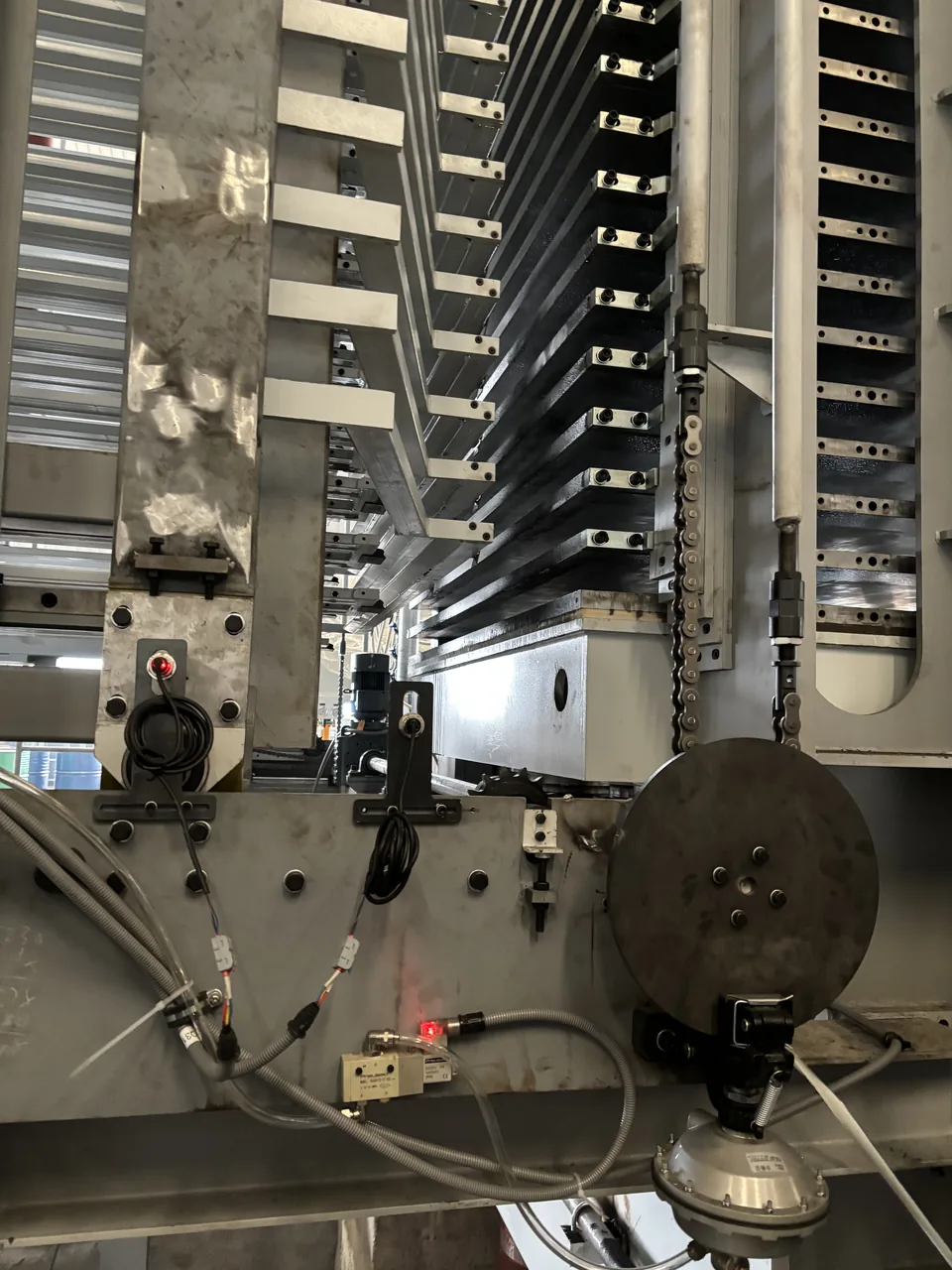
Автоматический горячий пресс для фанеры: оптимизация циклов прессования и кривых давления
Оптимизация работы горячего пресса: ступенчатый сброс давления, предотвращение паровых пузырей и равномерная полимеризация клеевого шва.
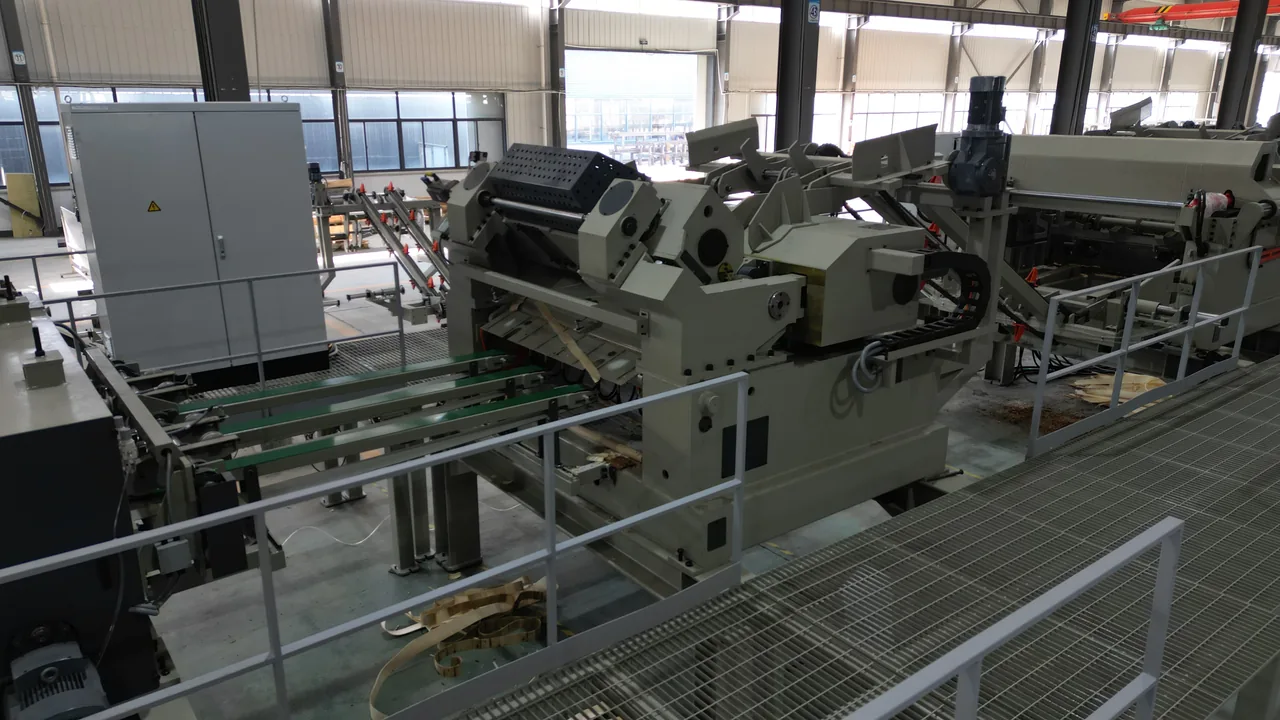
Выбор бесшпиндельного лущильного станка: лущение внутреннего слоя против лицевого шпона
Настройка лущильного станка под разные типы шпона: геометрия прижимной линейки, угол заточки ножа, сервоприводы и гладкость поверхности среза.