
Роликовая или сетчатая сушилка шпона: энергозатраты, производительность и руководство по выбору
Инженерное руководство по выбору между роликовыми и сетчатыми сушилками шпона. Сравнение затрат на биотопливо, пар и термомасло, зоны сушки и производительность.

In a modern plywood factory, the veneer drying section accounts for approximately 55% to 65% of the mill's total thermal energy consumption and represents the second largest machinery capital expenditure after the peeling line.
Drying green veneer from initial moisture contents of 70% to 100% down to the optimal bonding range of 8% to 12% (10% ± 2%) is essential. Under-dried veneer causes steam bubbling, delamination, and adhesive washout during hot pressing; over-dried veneer becomes brittle, fractures during handling, and absorbs excessive resin glue.
When designing a drying section, mill operators primarily evaluate two core technologies:
- 1Roller-Type Continuous Veneer Dryers
- 2Wire Mesh Belt Conveyor Dryers
*(as well as hybrid Mesh-Roller combinations and breathing hot press dryers)*
This industrial guide breaks down thermal engineering benchmarks, operating costs per cubic meter across different heating fuels, and factory selection criteria based on Hanvy's heavy-duty dryer manufacturing data.
1. Technical Comparison: Roller vs. Mesh Belt Dryers
The transport mechanism inside the heated drying chamber directly dictates veneer flatness, feeding speed, and thickness suitability:
| Engineering Parameter | Multi-Deck Roller Veneer Dryer | Wire Mesh Belt Veneer Dryer |
|---|---|---|
| Conveyor Mechanism | Opposing upper and lower driven steel rollers (100 mm diameter) | High-strength continuous stainless/galvanized wire mesh belt |
| Roller / Mesh Pitch | 333 mm spacing for smooth veneer flow | Continuous mesh support bed |
| Optimal Veneer Thickness | 1.2 mm to 3.8 mm (Core & Structural Plies) | 0.2 mm to 1.2 mm (Thin Face & Back Veneer) |
| Veneer Ironing / Flattening | Superior (opposing rollers press out natural wood wave) | Moderate (relying on gravity and circulating jet airflow) |
| Air Delivery System | Dual upper and lower aerodynamic jet boxes | Vertical high-velocity jet box nozzles |
| Decks Available | 2, 3, 4, or 5 decks | 2, 3, or 4 decks |
| Conveyor Speed Range | 0 to 15 meters per minute variable | 0 to 25 meters per minute variable |
| Bearing Technology | High-temperature self-lubricating PTFE composite blocks | Heavy-duty self-aligning bearing housings |
| Hourly Output Range | 2.0 to 5.0 cubic meters dry veneer per hour | 1.8 to 3.5 cubic meters dry veneer per hour |

2. Thermal Energy Economics: Fuel Cost per Cubic Meter
Thermal energy represents the dominant ongoing operating expense of any industrial veneer dryer. Depending on your mill's geographic location and available energy sources, three primary heating media are utilized:
Operating Cost Comparison (Drying 1 m³ of Green Veneer from 75% to 10% Moisture)
| Heating Source | Fuel Required per Cubic Meter | Fuel Consumption Metric | Estimated Energy Cost per m³ |
|---|---|---|---|
| Biomass Direct Hot Air | Mill wood waste, peeler cores, bark | 85 to 110 kg biomass | 3.50 to 6.00 (Lowest cost) |
| Thermal Oil Heater | Biomass, heavy oil, or natural gas | 0.35 to 0.45 Gcal heat | 9.00 to 14.50 |
| Steam Boiler System | Saturated steam (0.8 to 1.3 MPa) | 550 to 750 kg steam | 12.00 to 18.00 |
The Circular Factory Advantage
Mills that pair their veneer drying lines with a biomass burner furnace achieve significant economic advantages. By combusting outer bark stripped by the hydraulic log debarker and dry trimming strips from the sizing saw line, the plant generates clean thermal energy directly from its own byproducts. This approach reduces ongoing fuel purchases by up to 60%, insulating the mill from volatile natural gas or fossil fuel prices.
3. The Three Drying Zones in Continuous Tunnel Chambers
Modern high-performance dryers utilize an insulated modular tunnel divided into three synchronized thermodynamic zones:
[Automatic Infeed Station]
          │
          ▼
[Zone 1: Rapid Heating & Evaporation Section] (140°C to 175°C)
  - Rapidly raises green veneer temperature toward boiling point
  - Fast extraction of unbound free water from timber cell cavities
          │
          ▼
[Zone 2: Controlled Diffusion Section] (130°C to 150°C)
  - Gentle removal of bound water below the fiber saturation point (FSP)
  - Counter-flow air circulation eliminates hot spots and internal stress
          │
          ▼
[Zone 3: Ambient Forced Cooling Section] (30°C to 45°C)
  - High-volume fans draw cool outside air across exit decks
  - Stabilizes moisture content at 10% ± 2% and cools sheets for stacking
          │
          ▼
[Automatic Veneer Stacking Table]
Structural & Thermal Design Highlights:
- ✓100 mm Seamless Steel Rollers: Machined with balanced precision to prevent veneer jamming, wrinkling, or buckling during continuous high-temperature conveyance.
- ✓Thick Rockwool Insulation Panels: Exterior wall panels are packed with high-density mineral wool insulation (100 mm to 150 mm thickness) to minimize surface heat radiation and maintain chamber thermal efficiency.
- ✓Independent Zone Radiators: Each heating section is equipped with dedicated bimetallic heat exchangers, allowing precise temperature profiling across the entire tunnel length.
4. Dryer Sizing Benchmarks: Hanvy Standard Production Models
Rather than estimating throughput through theoretical formulas, industrial plant planners rely on tested factory performance data. Below are standard engineering specifications for Hanvy continuous veneer dryers:
| Engineering Parameter | Model HG132 (2-Deck Roller) | Model HG182 (2-Deck Mesh) | Model HG133 (3-Deck Roller) | Model HG134 (4-Deck Roller) |
|---|---|---|---|---|
| Deck Number | 2 Decks | 2 Mesh Belts | 3 Decks | 4 Decks |
| Working Width | 3,000 mm | 3,000 mm | 3,000 mm | 3,000 mm |
| Heating Tunnel Length | 16,100 mm (8 Sections) | 16,100 mm (8 Sections) | 16,100 mm (8 Sections) | 20,100 mm (10 Sections) |
| Cooling Tunnel Length | 2,100 mm (1 Section) | 2,100 mm (1 Section) | 2,100 mm (1 Section) | 2,100 mm (1 Section) |
| Initial / Target Moisture | 75% in / 10% ± 2% out | 75% in / 10% ± 2% out | 75% in / 10% ± 2% out | 75% in / 10% ± 2% out |
| Drying Capacity | 2.0 m³/hour | 2.0 m³/hour | 3.0 m³/hour | 4.5 to 5.0 m³/hour |
| Steam Consumption | 1,780 kg/hour | 1,780 kg/hour | 2,580 kg/hour | 3,800 kg/hour |
| Total Motor Power | 81.2 kW | 85.5 kW | 116.7 kW | 154.5 kW |
| Conveyor Speed Range | 0 to 15 m/min | 0 to 25 m/min | 0 to 15 m/min | 0 to 18 m/min |
| Overall Dimensions | 29.1m x 5.3m x 3.7m | 29.6m x 5.3m x 3.7m | 29.1m x 5.3m x 4.2m | 33.1m x 5.3m x 4.6m |
| Total Machine Weight | 45,000 kg | 42,000 kg | 49,000 kg | 62,000 kg |
5. Machine Selection Guidelines: Which Dryer Fits Your Mill?
When finalizing your drying line configuration, use the following operational guidelines:
- 1For Core Veneer (1.5 mm to 3.5 mm thickness): Select a 3-Deck or 4-Deck Roller Dryer (HG133 or HG134). The continuous contact of opposing steel rollers produces flat, crack-free core sheets ready for immediate composing and glue spreading.
- 2For High-Grade Face/Back Veneer (0.2 mm to 0.8 mm thickness): Select a 2-Deck Wire Mesh Belt Dryer (HG182). Fine woven wire mesh prevents delicate, paper-thin veneers from catching on rollers or breaking along annual growth rings.
- 3For Mills Producing Both Face & Core Plies: Select a Hybrid Mesh & Roller Dryer (Model HG192), featuring top mesh decks for delicate face veneer and lower roller decks for heavy core sheets within a shared thermal tunnel.
Conclusion & Custom Project Engineering
Selecting the right veneer dryer configuration ensures consistent sheet moisture, minimizes thermal fuel costs, and prevents costly hot-press bonding defects.
Contact Hanvy Machinery's engineering team at [email protected] for custom drying tunnel simulations, thermal energy consumption calculations, and layout CAD proposals tailored to your factory's target panel output.
Инженерно-техническая команда Hanvy Machinery
Свыше 30 лет опыта проектирования и производства тяжелого деревообрабатывающего оборудования. Более 500 комплектных заводов в 69 странах.
Рекомендуемые отраслевые статьи

Линия лущения шпона: сравнение форматов 4 фута и 8 футов, производительность и экономика
Экономический и технический анализ линий лущения 4x4 и 4x8 футов: окупаемость вложений, экономия сырья и спецификация оборудования для фанерных комбинатов.
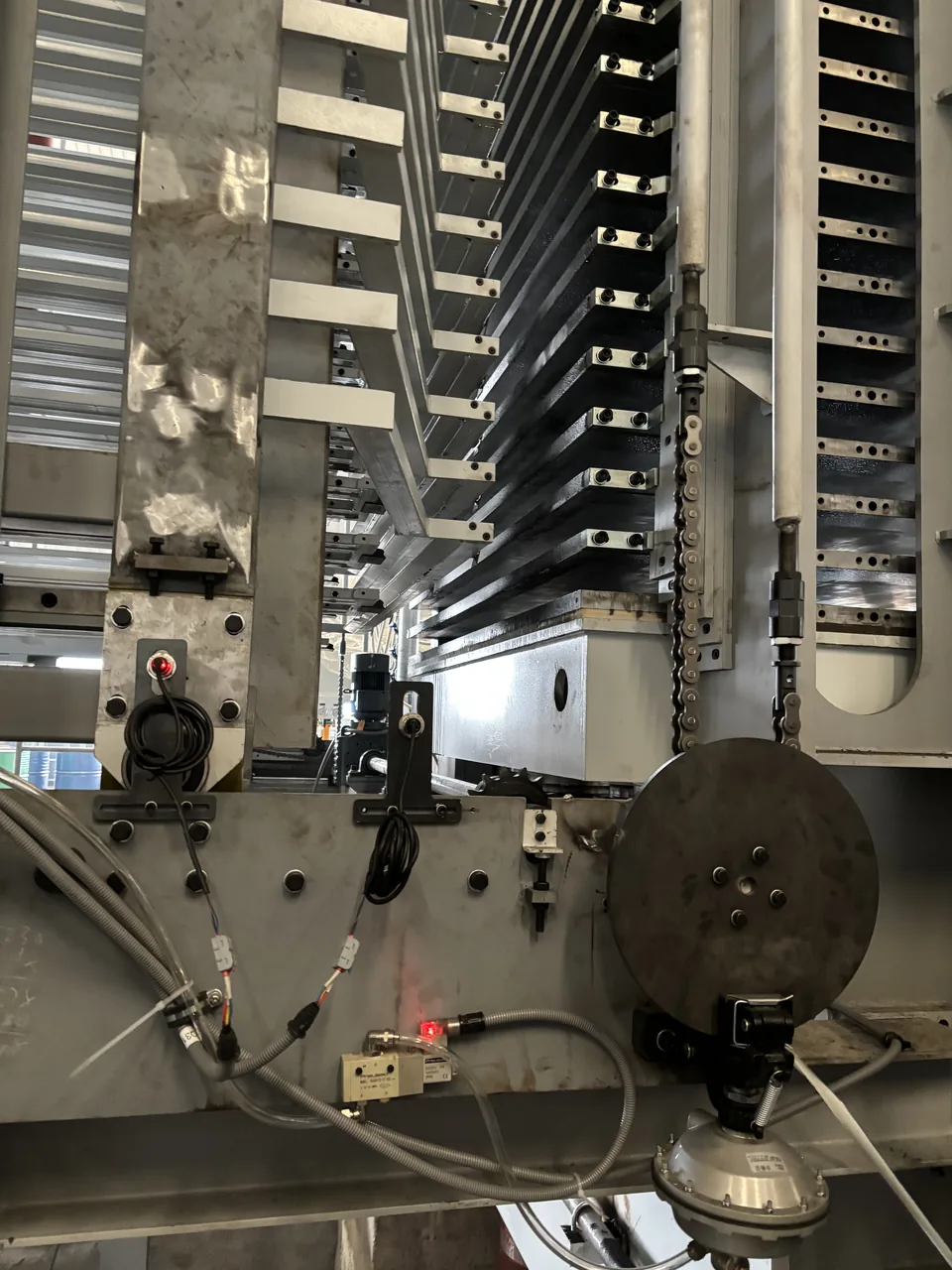
Автоматический горячий пресс для фанеры: оптимизация циклов прессования и кривых давления
Оптимизация работы горячего пресса: ступенчатый сброс давления, предотвращение паровых пузырей и равномерная полимеризация клеевого шва.
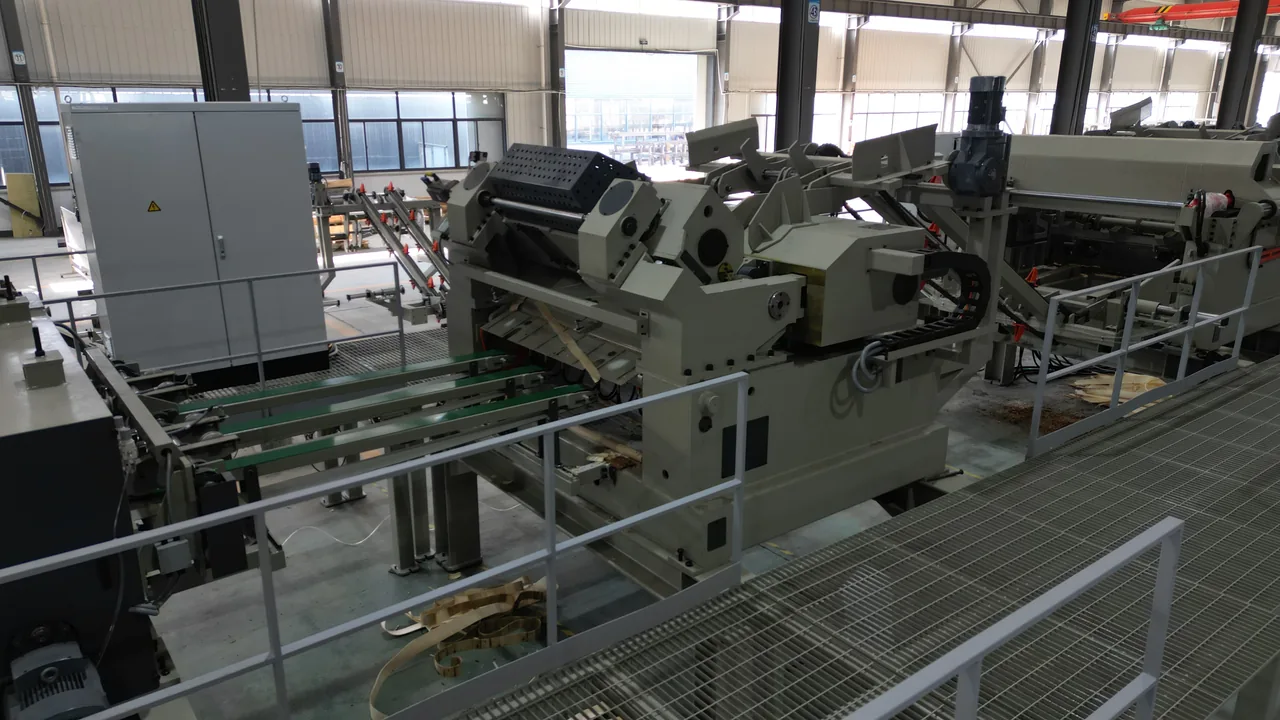
Выбор бесшпиндельного лущильного станка: лущение внутреннего слоя против лицевого шпона
Настройка лущильного станка под разные типы шпона: геометрия прижимной линейки, угол заточки ножа, сервоприводы и гладкость поверхности среза.