
Tour avec Broche vs Tour sans Broche: Quel Système Offre le Meilleur Rendement?
Comparatif technique entre les tours de déroulage sans broche et les tours à broches télescopiques traditionnels. Valorisation des billons jusqu'à 28 mm.

In rotary veneer production, raw timber represents anywhere from 55% to 70% of the total factory operating cost. Every millimeter of wood left behind in the core residue directly erodes the mill's profit margin.
For decades, traditional spindle lathes were the backbone of the plywood industry. However, the emergence of modern CNC spindleless veneer peeling lathes has revolutionized how timber mills process small-to-medium diameter logs, plantation hardwoods (such as eucalyptus and acacia), and fast-growing softwoods.
If you are upgrading an existing rotary peeling line or planning a turnkey plywood production line, this guide breaks down the core technical, mechanical, and financial differences between spindle and spindleless veneer peeling technologies.
1. The Core Mechanical Difference: Driving Mechanisms
The fundamental distinction lies in how rotational torque is applied to the log:
- ✓Spindle Veneer Lathes:
Telescopic steel chucks (spindles) pierce both ends of the log along its geometric center to drive rotation. As peeling progresses and the log diameter decreases, the spindle diameter becomes a physical limit. Conventional spindles cannot safely peel past a residual core diameter of 100 mm to 140 mm without the log flexing, splitting, or slipping on the chucks.
- ✓Spindleless Veneer Peeling Lathes:
Instead of chucking the ends, the log is cradled and friction-driven from the outside perimeter by two heavy-duty knurled driving rollers and one friction back roller. Dual servo motors drive the knife carriage horizontally along precision preloaded ball screws. Because there are no chucks penetrating the ends, the lathe can continuously peel the log down to a pencil-thin residual core of just 25 mm to 30 mm.
2. Recovery Rate Comparison: The Numbers That Matter
Consider a typical small-diameter plantation log with an initial diameter of 200 mm and a length of 1300 mm:
| Metric | Traditional Spindle Lathe | Hanvy CNC Spindleless Lathe |
|---|---|---|
| Initial Log Diameter | 200 mm | 200 mm |
| Residual Core Diameter | 110 mm | 28 mm |
| Core Residue Volume | ~0.0123 m³ (30.2%) | ~0.0008 m³ (2.0%) |
| Theoretical Wood Recovery | 50% – 58% | 72% – 82% |
| Thickness Tolerance | ±0.08 mm | ±0.02 mm |
| Max Peeling Speed | 40 – 60 m/min | Up to 80 m/min (CNC Servo) |
By recovering wood that was previously relegated to low-value boiler fuel or biomass chips, a high-precision spindleless veneer peeling machine recovers an additional 15% to 25% of saleable core veneer from every single cubic meter of timber processed.
3. The Role of Log Rounding and Peeling Integration
Before a log enters the lathe, it must be debarked and rounded into a true cylinder. Skipping this step damages lathe blades and wastes valuable cutting time.
Pairing a high-torque hydraulic log debarker with a spindleless peeling and rotary clipper system creates an unbroken manufacturing rhythm. In high-efficiency operations, mills utilize integrated 2-in-1 veneer peeling and clipping lines where peeling and rotary pneumatic clipping are synchronized by a single industrial PLC. Sheets are cut to width on the fly at line speeds exceeding 60 m/min, eliminating manual handling between lathe and stacker.
For a full step-by-step breakdown of how rotary peeling fits into the wider mill workflow, consult our complete guide to the plywood manufacturing process.
4. Key Engineering Features to Look for in a Spindleless Lathe
Not all spindleless lathes are built alike. When evaluating machinery for industrial continuous duty, verify the following specifications:
- 1Gantry Milling of Heavy-Duty Frames:
Vibration during peeling causes "chatter marks" and uneven thickness. High-grade machines use thick annealed structural steel frames, precision-machined on a single CNC gantry milling bed.
- 1Servo CNC Infeed vs. Hydraulic Infeed:
Servo motors coupled with dual preloaded ground ball screws maintain sub-millimeter positioning accuracy even as log cutting resistance spikes.
- 1Automatic Hydraulic Knife Clamping:
Reduces knife changeover time from 30 minutes to under 5 minutes, significantly boosting daily machine availability.
- 1Hydraulic Gap Adjustment:
Automatically alters the clearance between the roller and pressure bar as veneer thickness settings change, preventing veneer tearing.
5. Downstream Compatibility: Keeping Pace with Jet Dryers
A high-speed spindleless lathe line produces thousands of square meters of green veneer per shift. To prevent factory congestion, green sheets must immediately transfer to a fully automatic veneer drying line capable of continuous jet drying to reach the target 8–12% moisture content.
Frequently Asked Questions (FAQ)
Can a spindleless lathe peel hardwood logs?
Yes. Modern heavy-duty CNC spindleless lathes handle hard plantation species including eucalyptus, acacia, rubberwood, and birch. Pre-soaking or steaming dense hardwood logs softens the fibers and ensures smooth veneer peeling without knife micro-chipping.
What happens to the 28mm log core leftover?
Small cores can be bundled and sold as furniture posts, fence pickets, agricultural stakes, or chipped for particleboard and biomass burner fuel.
How quickly does an upgrade to a CNC spindleless lathe pay for itself?
For a factory processing 30 m³ of logs per day, the 15–20% gain in veneer recovery rate typically yields complete equipment payback within 4 to 7 months purely from timber savings.
Plan Your High-Recovery Peeling Line
Hanvy Machinery manufactures full turnkey veneer peeling and clipping equipment with international CE and ISO certifications.
Équipe d'Ingénierie Hanvy Machinery
Conçu avec plus de 30 ans d'expertise dans la fabrication de machines pour contreplaqué. Plus de 500 lignes installées dans 69 pays.
Guides Techniques Recommandés

Ligne de Déroulage sans Broche: Guide de Configuration 4 ft vs. 8 ft, Rendement et Économie
Rentabilité industrielle des formats 4 et 8 pieds: calcul des économies de bois d'œuvre, intégration d'empileurs à dépression et cadences d'usine.

Séchoir à Rouleaux vs. Séchoir à Tapis: Consommation d'Énergie, Rendement et Guide de Choix
Spécifications des séchoirs Hanvy séries HG: tubes sans soudure 100 mm, roulements graphite et téflon, et réduction des consommations thermiques.
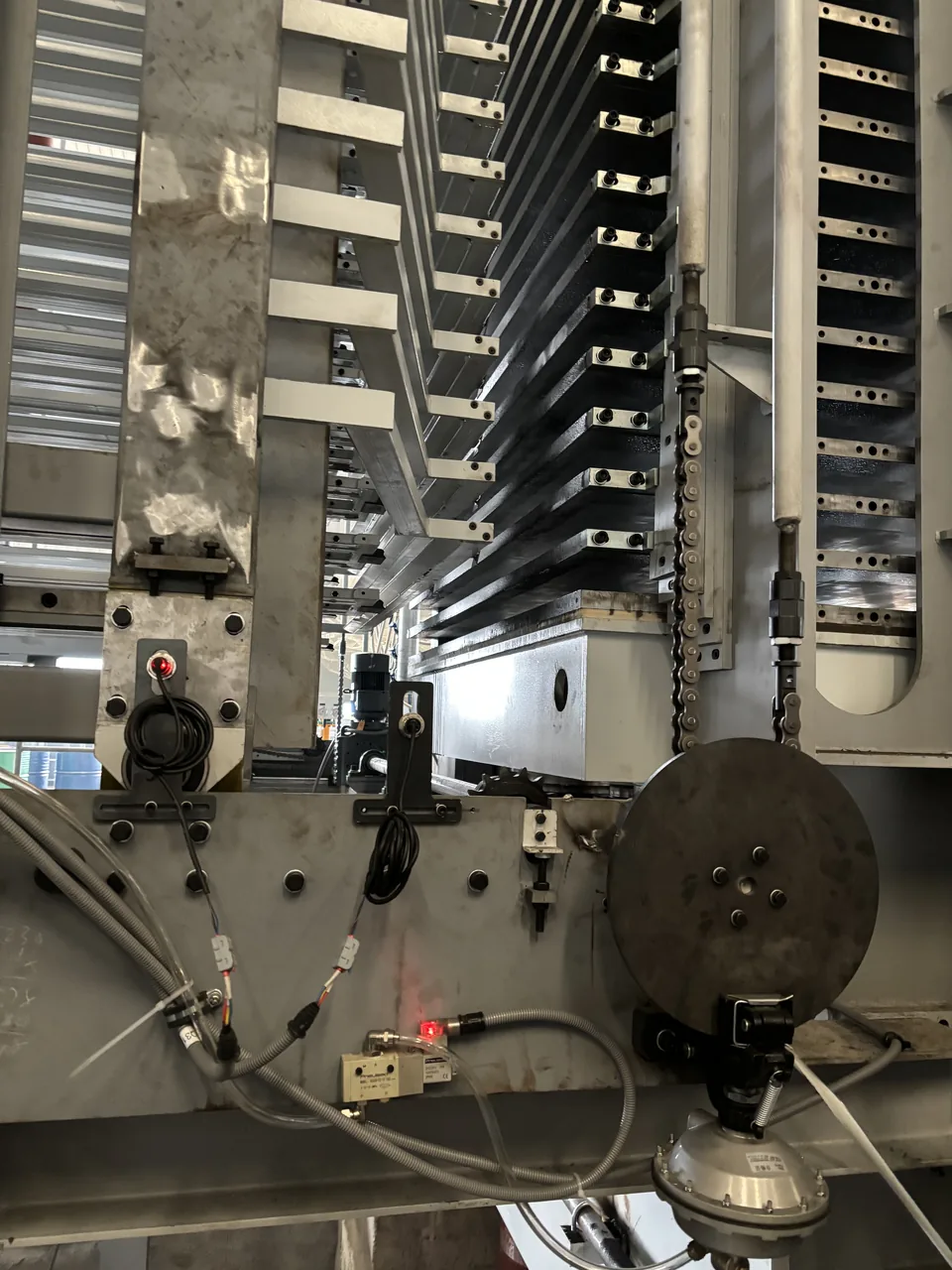
Presse Hydraulique Automatique pour Contreplaqué: Optimisation des Cycles et Courbes de Pression
Maîtrise du pressage à chaud industriel: transmission thermique au cœur du panneau, polymérisation des colles et cadences de chargement automatique.