
What is a Plywood Machine? Key Stages, Equipment List & Complete Manufacturing Process
What is a plywood machine? Complete engineering guide detailing the key stages, essential equipment, working process, and machinery specifications in modern plywood manufacturing.

A plywood machine refers to the specialized industrial units and heavy-duty processing equipment configured along a complete plywood making machine line to transform raw hardwood or softwood timber logs into structural and commercial engineered plywood panels.
Making plywood requires a coordinated sequence of mechanical, thermal, and hydraulic processing stages—progressing from raw round log conditioning and debarking to rotary peeling, drying, gluing, hot press curing, and surface sanding.
Whether an investor is planning a turnkey 30–80 m³/day plywood factory or an operational mill is upgrading a single processing bottleneck, understanding how each individual plywood machine functions and interacts within the production line is essential for maximizing green veneer recovery rates and minimizing glue consumption.
Key Stages and Machines in Plywood Production
Industrial plywood manufacturing operates through six continuous mechanical phases. Below is the technical breakdown of each stage and the primary machinery involved:
1. Log Debarking & Rounding
Before any log enters the precision peeling lathe, it must be thoroughly stripped of bark, embedded dirt, sand, and stones picked up during forest harvesting and transport.
- ✓Primary Machinery: Heavy-Duty Hydraulic Log Debarker (available in 4ft and 8ft models).
- ✓Mechanical Function: Driven toothed rollers rotate the timber while a hydraulic cutter head traverses longitudinally along the log surface. The high-speed cutter removes bark down to the cambium layer without cutting excessively into valuable timber, profiling irregular oval trunks into concentric cylinders.
- ✓Engineering Impact: Effective debarking protects costly CNC peeling lathe knives from chipping, prevents knife changes mid-shift, and improves initial continuous veneer yield by up to 8%.
2. Rotary Veneer Peeling
The rotary peeling section is the primary profit generator of the entire plywood manufacturing plant.
- ✓Primary Machinery: CNC Spindleless Veneer Peeling Lathe with integrated rotary clipper.
- ✓Mechanical Function: The rounded log log is held and driven by dual hydraulic friction rollers while a computer-controlled linear ball screw feed system pushes the heavy alloy knife into the wood at precise sub-millimeter increments. As the log spins, it is peeled into continuous veneer ribbons with thickness ranging from 0.5 mm to 3.6 mm. The integrated rotary clipper then slices the ribbon into standardized 4x8 ft sheets or clips around natural wood defects using optical sensors.
- ✓Recovery Benchmark: Advanced CNC servo control reduces the residual wood core diameter down to 25–30 mm, recovering over 90% of the log volume compared to legacy spindle lathes that left 100–120 mm waste cores.
3. Veneer Drying & Composing
Freshly peeled green veneer has a moisture content (MC) between 40% and 120% depending on log species (e.g., plantation eucalyptus vs. soft pine). Adhesives cannot cure properly on wet wood.
- ✓Primary Machinery: Multi-Deck Roller Continuous Veneer Dryer or Mesh Belt Veneer Dryer.
- ✓Mechanical Function: Veneer sheets travel continuously through thermally insulated chambers heated via biomass burners, thermal oil heat exchangers, or high-pressure steam coils. Jet blowers circulate hot air at 140°C–180°C symmetrically onto both sides of the wood sheets, exhausting vapor while keeping the sheets flat under spring-loaded rollers.
- ✓Downstream Splicing: Once dried to 8%–10% MC, random narrow strips are processed through an Automatic Core Veneer Composer, which applies spot-glue or fiberglass thermal melting thread to assemble narrow pieces into solid 4x8 ft core boards.
4. Glue Spreading & Cold Pre-Pressing
Once core sheets and face/back veneers are prepared, adhesive resin is applied to build the layered panel billet (always assembled in odd-numbered plies with alternating grain directions: 3-ply, 5-ply, 7-ply, etc.).
- ✓Primary Machinery: Four-Roll Double-Sided Glue Spreader and Hydraulic Plywood Cold Press Machine (400–600 Ton capacity).
- ✓Mechanical Function: Grooved rubber applicator rollers deposit a uniform, measured coating of urea-formaldehyde (UF), melamine-urea-formaldehyde (MUF), or phenol-formaldehyde (PF) adhesive on both sides of core veneers at 280–360 g/m². The assembled stack is loaded into a cold pre-press under 1.0–1.2 MPa ambient pressure for 15–30 minutes. This creates an initial green tack bond that holds the plies flat and prevents shifting during hot loader charging.
5. High-Pressure Hot Pressing
Hot pressing is where the thermo-chemical polymerization of the resin adhesive takes place, fusing separate veneer plies into a solid, waterproof engineered board.
- ✓Primary Machinery: Multilayer Hydraulic Plywood Hot Press Machine (10, 15, 20, or 25 daylights/openings with automatic simultaneous loaders and unloaders).
- ✓Mechanical Function: Massive forged steel hydraulic rams exert 500 to 1,200 metric tons of total pressing force. Heavy solid-drilled steel platens heated with circulating thermal oil or steam maintain a uniform temperature across the entire board surface (typically 120°C–145°C).
- ✓Process Optimization: Programmable PLC logic executes multi-stage pressure curves: rapid closure, maximum consolidation pressure, controlled de-compression venting to release trapped steam without panel blistering, and rapid opening.
6. Edge Trimming, Calibration & Sanding
After resting for 24–48 hours to allow adhesive post-curing and moisture equalization, raw pressed boards undergo dimensional sizing and surface calibration.
- ✓Primary Machinery: Automatic Plywood Edge Sizing Saw (DD Saw) and Wide-Belt Calibrating & Polishing Sanding Machine.
- ✓Mechanical Function: Continuous roll-in chains feed panels through high-speed tungsten-carbide hogging saw blades that trim all four edges square to standard dimensions (e.g., 1220 x 2440 mm / 4x8 ft) with diagonal tolerances within ±1.0 mm. Dual-head or triple-head wide-belt sanders then calibrate panel thickness to ±0.1 mm tolerance, removing surface tape, glue bleed-through, and fiber roughness.
Plywood Production Stages & Machinery Specifications Matrix
The following table summarizes the equipment specifications across a standard medium-to-large capacity industrial plywood factory (producing 40–60 m³ finished boards per 8-hour shift):
| Production Stage | Essential Machinery | Processing Speed / Output | Key Engineering Specifications |
|---|---|---|---|
| Stage 1: Log Prep | Hydraulic Log Debarker | 30–50 m³/shift (8h) | Max. log diameter: 600 mm; 4ft / 8ft length |
| Stage 2: Peeling | CNC Spindleless Lathe & Clipper | 40–80 m/min linear speed | Peeling thickness: 0.5–3.6 mm; Residual core: 25 mm |
| Stage 3: Drying | 4-Deck Roller Continuous Dryer | 2.5–6.0 m³/hour dried veneer | Heated zone: 20–36 meters; Target moisture: 8%–10% |
| Stage 4: Splicing | Automatic Core Veneer Composer | 1–3 sheets/minute | Thermal hot-melt thread / Spot PVA glue jointing |
| Stage 5: Gluing | 4-Roll Glue Spreader & Cold Press | 800–1200 sheets/shift | Applicator roll width: 1400 mm; Cold press: 400–600T |
| Stage 6: Hot Press | 15–25 Daylight Hydraulic Hot Press | 30–80 m³/day finished panel | Total force: 500–1200 Tons; Platen size: 1370 x 2700 mm |
| Stage 7: Finishing | Automatic DD Saw & Wide Belt Sander | Line speed: 15–25 m/min | Diagonal error: ≤ 1.0 mm; Thickness tolerance: ±0.1 mm |
Single Machine vs. Turnkey Production Line: Which Do You Need?
When sourcing plywood machinery, mill owners generally face two distinct engineering procurement paths:
Option A: Sourcing Individual Standalone Machines
- ✓Best For: Existing operational plywood factories suffering from a specific bottleneck—such as outdated spindle lathes leaving excessive core waste, an undersized dryer restricting peeling volume, or an old steam press with leaking packings.
- ✓Key Considerations: Ensure that motor voltages (380V/415V/440V 50/60Hz), hydraulic pump flow rates, and infeed/outfeed conveyor heights match your existing factory infrastructure. Modular machines from Hanvy Machinery are engineered with drop-in mechanical interfaces for seamless factory integration.
Option B: Turnkey Plywood Production Line Engineering
- ✓Best For: Green-field investments, timber concession holders expanding downstream, or veneer mills advancing into finished board manufacturing.
- ✓Key Considerations: Complete lines require coordinated machine capacities. For instance, if an 8ft peeling lathe outputs 60 m³ of wet veneer per shift, the downstream multi-deck dryer and hot press capacity must be precisely matched to prevent wet veneer stacking degradation. Turnkey project delivery includes workshop layout CAD drawings, boiler thermal sizing, electrical distribution engineering, containerized shipping, and on-site overseas installation and technician training.
Frequently Asked Questions (FAQ)
What machines are required to start a small to medium plywood factory?
To produce standard 4x8 ft commercial plywood, a factory requires at minimum:
- 1Log cut-off saw and hydraulic log debarker
- 2CNC spindleless veneer peeling line with rotary clipper
- 3Continuous roller or mesh veneer dryer
- 4Automatic core veneer composer
- 5Glue spreader with glue mixer
- 6Hydraulic cold pre-press
- 7Multi-daylight hydraulic hot press
- 8Edge trimming sizing DD saw
- 9Wide-belt calibrating sander
How much does a complete plywood making machine line cost?
Turnkey plywood production line costs vary widely based on automation level, daily output, and timber species:
- ✓Semi-automated plant (15–20 m³/day): Approximately 120,000 – 220,000 USD.
- ✓Medium industrial line (30–50 m³/day): Approximately 280,000 – 550,000 USD.
- ✓High-capacity automated plant (60–100+ m³/day): 650,000 – 1,300,000+ USD.
What wood species can be peeled on a CNC spindleless veneer lathe?
Modern CNC spindleless lathes can peel both softwoods and high-density hardwoods, including plantation eucalyptus, poplar, pine, rubberwood, birch, radiata pine, okoume, and various tropical hardwood species. Dense hardwoods require log steaming/boiling conditioning prior to debarking and peeling to soften wood lignin and ensure smooth veneer surfaces.
Consult Hanvy Machinery for Plywood Line Engineering
As an ISO-certified heavy woodworking machinery manufacturer with over 30 years of export experience to timber-rich regions across Southeast Asia, South America, Eastern Europe, and Africa, Hanvy Machinery supplies both standalone units and comprehensive turnkey plywood plants.
Contact our engineering team with your raw log diameter, target panel thickness, and desired daily cubic meter capacity to receive a custom equipment quotation and workshop layout design within 24 hours.
❓ Часто задаваемые вопросы
Q:What machines are required to start a small to medium plywood factory?
A standard plywood manufacturing mill requires: 1. Log debarker, 2. CNC spindleless veneer peeling lathe, 3. Roller veneer dryer, 4. Core composer, 5. Glue spreader, 6. Cold pre-press, 7. Multilayer hydraulic hot press, 8. Plywood edge trimming DD saw, and 9. Wide belt sander.
Q:How much does a complete plywood making machine line cost?
Turnkey plywood production line costs typically range from $120,000 for small-scale semi-automated setups (10-15 m3/day) to $500,000-$1,200,000+ for high-capacity, fully automated continuous 4x8 ft mills.
Q:What wood species can be peeled on a CNC spindleless veneer lathe?
Modern CNC spindleless lathes can peel both softwoods and high-density hardwoods, including plantation eucalyptus, poplar, pine, rubberwood, birch, radiata pine, okoume, and various tropical hardwood species.
Инженерно-техническая команда Hanvy Machinery
Свыше 30 лет опыта проектирования и производства тяжелого деревообрабатывающего оборудования. Более 500 комплектных заводов в 69 странах.
Рекомендуемые отраслевые статьи

Veneer Scarf Jointing vs. Core Composing: How to Produce Oversized & High-Strength Plywood Panels
Engineering comparison of veneer scarf jointing and core composing: 1:10 bevel geometry, longitudinal tensile strength, thermal thread composing, and machinery for container flooring and marine plywood.
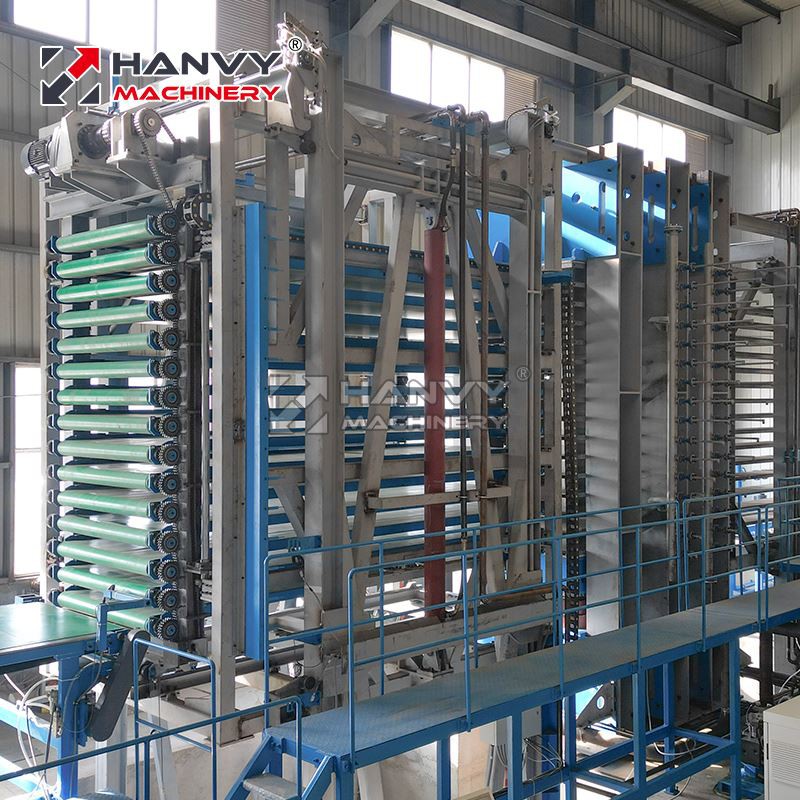
Short Cycle Melamine Laminating Hot Press Machine: The Complete Industrial Guide for Plywood & Panel Mills
Industrial guide to short cycle melamine laminating presses: technical specifications, fast pre-fill hydraulics, 15-30s press cycles, thermal oil platens, and economic ROI for plywood and panel mills.
Troubleshooting Veneer Knife Grinding Defects: Edge Burning, Chatter Marks & Bowing Prevention
Engineering diagnostic guide for troubleshooting the 5 most critical veneer knife grinding failures: edge burning, chatter ripples, blade bowing, feathered burrs, and angle inconsistency.