
How to Start a Plywood Factory: Machines, Cost and Layout Guide
Step-by-step guide to starting a plywood factory: required machines, investment budget, plant layout, raw material and staffing, plus common mistakes new owners make.

How to Start a Plywood Factory: Machines, Cost and Layout Guide
Demand for plywood keeps growing in construction, furniture and packaging markets across Southeast Asia, Africa, South America and the Middle East. That is exactly why so many investors ask the same question: how do you start a plywood factory, and what does it actually take?
This guide walks through the seven steps we use with customers in 69 countries — from defining your product to commissioning the line — with realistic budget references and the mistakes we see new owners make.
Step 1: Define Your Product and Capacity First
Everything — machine selection, budget, even the building size — flows from three decisions:
- ✓Board size: 4x8 ft (1220×2440 mm) is the global standard; some markets prefer 3x6 ft or 5x10 ft
- ✓Thickness range: most commercial plywood runs 8–18 mm; film faced and furniture grades have different face-veneer requirements
- ✓Daily capacity: small plants target 15–30 m³/day, mid-size plants 40–80 m³/day, large automatic plants exceed 100 m³/day
A useful sanity check: to produce 1 m³ of finished plywood you need roughly 2.3–2.6 m³ of logs depending on species and peeling yield, plus 8–12% glue by veneer weight. Confirm your local log supply (specie, diameter, price, seasonality) before spending anything on machines.
Step 2: Build a Realistic Investment Budget
As a reference, equipment budgets for a standard 4x8 ft plant look like this:
| Plant scale | Equipment budget (USD) | Typical setup |
|---|---|---|
| Small, semi-automatic, ~20 m³/day | $250,000 – $450,000 | Manual loading, one peeling line, one hot press |
| Medium, semi/automatic, ~50 m³/day | $450,000 – $800,000 | Automatic peeling line, automatic hot press |
| Large, fully automatic, 80+ m³/day | $800,000 – $1,500,000 | Full automation with sorting and packing |
Add 20–35% for freight, installation, boiler, electrical works and spare parts on top of equipment cost, and keep at least two months of wages and log purchases as working capital. Many first-time owners budget only for machines and then squeeze the installation fund — never do that.
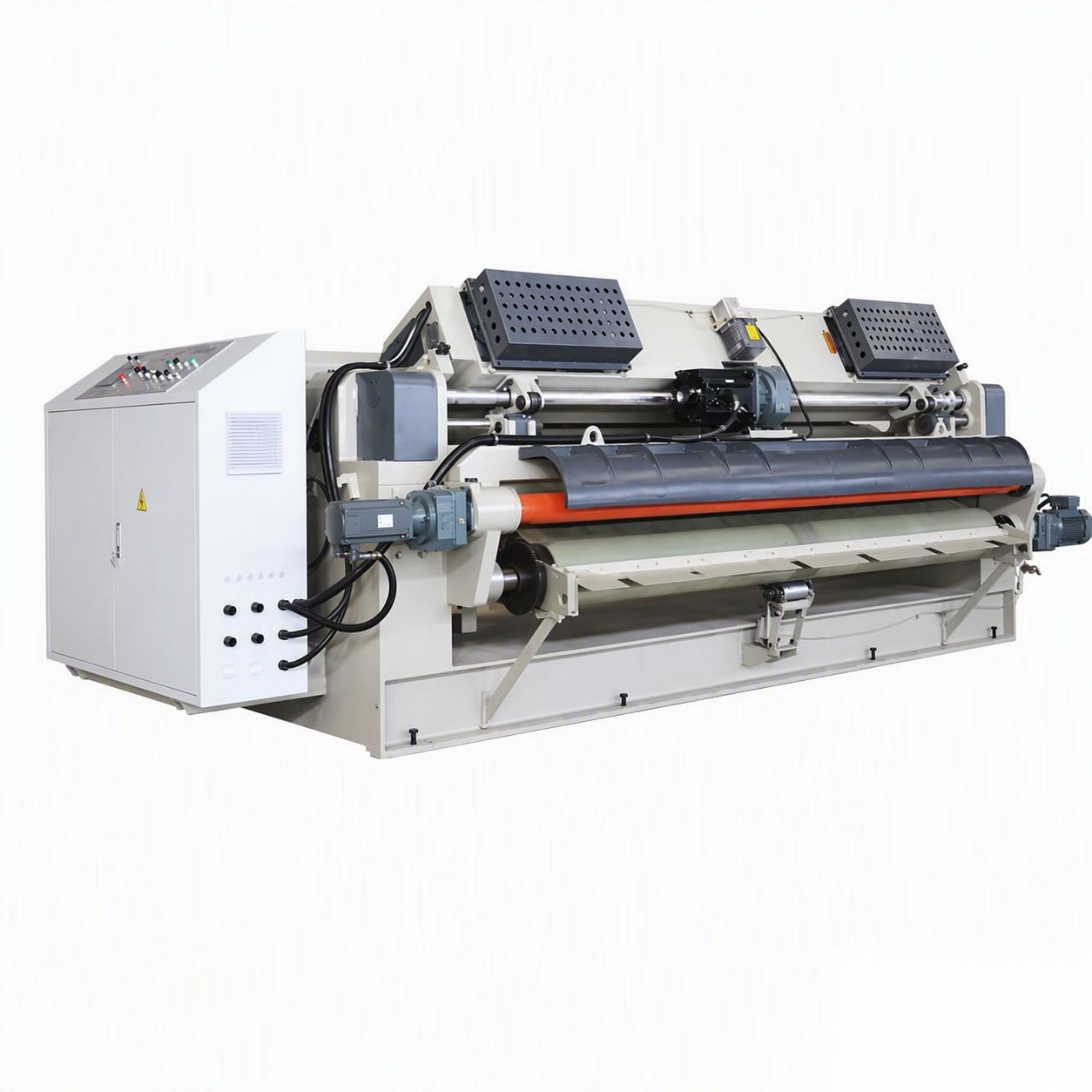
Step 3: Know the Machine Checklist by Heart
A working plywood factory needs these stations in order:
1. Log cutting saw – cross-cuts logs to peeling length
2. Log debarker / rounder – removes bark before peeling
3. Veneer peeling machine – the heart of the plant; spindleless machines peel cores down to a 40 mm leftover, spindle lathes produce face veneer
4. Veneer dryer – roller or mesh type, sized by the number of sections
5. Glue spreader – single or double side
6. Core veneer composer / lay-up line – builds the board blank
7. Cold press – pre-compacts the blank and removes air
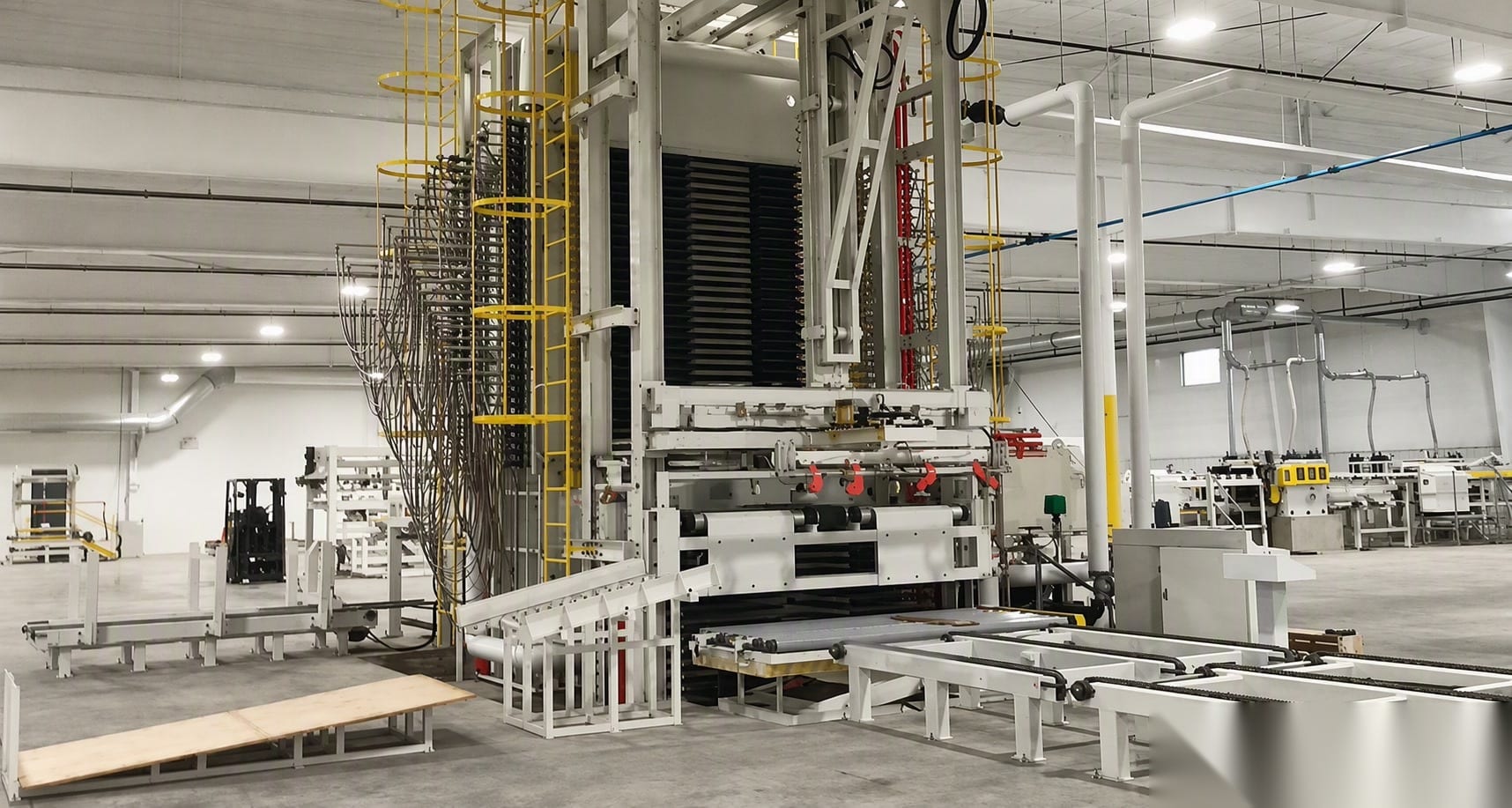
8. Hot press – cures the panel; the machine everyone underbuys
9. Edge trimming saw (double side / DD saw) – cuts to final dimension
10. Sanding machine – calibration and surface finish
Optional stations include a putty/mending line, film faced laminating press, moisture sorting and automatic packing. Buy the hot press and dryer slightly above today's need — these two machines define your ceiling.
Step 4: Site, Building and Layout
Rule of thumb for space:
- ✓Land: 8,000–15,000 m² for a mid-size plant, including a covered log yard
- ✓Production hall: at least 2,500–4,000 m², with 6–8 m clear height under the roof for the dryer and hot press structures
- ✓Power: 500–1,000 kVA installed capacity for a mid-size automatic line; confirm voltage/frequency with suppliers early (380V/50Hz is the machinery standard)
- ✓Water & drainage: for the boiler and glue room
- ✓Log yard flow: trucks should enter, dump and exit without reversing through production traffic
Lay the line in a straight flow — log yard → cutting → peeling → drying → gluing/lay-up → pressing → trimming → sanding → packing — so boards never travel backwards. A good supplier will draw the layout for you from your building dimensions; insist on this service before ordering.
Step 5: Secure Raw Material and Glue
- ✓Logs: sign seasonal supply agreements; mixed eucalyptus and pine is common in tropical plants, poplar and birch in continental climates
- ✓Glue: urea-formaldehyde (UF) for interior grades, phenol-formaldehyde (PF) or melamine-modified for exterior/film faced grades; budget a small glue mixing station rather than buying pre-mixed
- ✓Face veneer: if you cannot peel quality faces from local logs, plan a face-veneer purchase budget
Step 6: Staffing
A semi-automatic 4x8 ft line typically runs with 8–12 workers per shift (peeling line 3–4, dryer/glue 2–3, press 2–3, trimming/sanding 2, plus a maintenance electrician and fitter). Full automation cuts this to 3–5 per shift but demands better-trained technicians. Plan the supervisor's visit to your supplier's factory during installation — free training on real machines is worth more than any manual.
Step 7: Order, Install and Commission
A typical timeline from contract to first sale:
1. Contract and layout drawings – 2 weeks
2. Machine manufacturing – 30–60 days
3. Ocean freight – 3–6 weeks depending on destination
4. Civil works and power readiness – parallel with shipping
5. Installation and commissioning – 20–45 days with the supplier's engineers
6. Ramp-up – 2–4 weeks to reach rated output
Common Mistakes New Plywood Factory Owners Make
- ✓Buying the cheapest hot press (thin platens, weak hydraulics) and living with 30% lower output forever
- ✓Matching the dryer to today's capacity instead of tomorrow's — the dryer is the plant's bottleneck
- ✓Skipping the cold press to save money, then fighting blistered boards in the hot press
- ✓No spare peeling knives, saw blades or seals on site when the first breakdown happens
- ✓Ordering machines before finalizing the building layout
Frequently Asked Questions
How much land do I need for a plywood factory?
For a mid-size 4x8 ft plant producing ~50 m³/day, plan 8,000–15,000 m² total including log yard, production hall of 2,500–4,000 m² and packing/storage areas.
How long does it take to start producing?
From contract to first sellable boards usually takes 4–6 months, assuming the building and power are ready when machines arrive.
Can I start with just one machine?
You can start a veneer-selling business with a peeling line only, but producing plywood requires at least the peeling–pressing–trimming chain described above.
Ready to Plan Your Plywood Factory?
Send us your target board size, daily capacity, log species and building dimensions. Our engineers will design the machine list and factory layout for free — the same process we have used for 500+ turnkey projects in 69 countries.
[Get a Free Plant Proposal](/en/contact) · WhatsApp: +86 156 1079 1577 · Email: [email protected]
❓ Frequently Asked Questions
Q:How much land do I need for a plywood factory?
For a mid-size 4x8 ft plant producing ~50 m³/day, plan 8,000–15,000 m² total including log yard, production hall of 2,500–4,000 m² and packing/storage areas.
Q:How long does it take to start producing?
From contract to first sellable boards usually takes 4–6 months, assuming the building and power are ready when machines arrive.
Q:Can I start with just one machine?
You can start a veneer-selling business with a peeling line only, but producing plywood requires at least the peeling–pressing–trimming chain.
Hanvy Machinery Engineering Team
Engineered with 30+ years of industrial plywood machinery manufacturing expertise. Over 500 turnkey production plants installed in 69 countries worldwide.
Recommended Industry Guides

Plywood Making Machine Price in 2026: Complete Cost Breakdown
A complete breakdown of single machine costs ($5,000 - $120,000) and turnkey production line budgets ($250,000 - $800,000+), plus the 7 critical factors that decide machine prices.
Plywood Manufacturing Process: 7 Steps from Log to Finished Board
From tree log to calibrated board: explore the 7 critical stages of plywood manufacturing, loss percentages at each station, and essential quality control checkpoints.

How to Choose a Plywood Hot Press Machine: Tonnage, Layers and Heating Explained
The ultimate guide to choosing the right hot press: calculating exact specific pressure (kg/cm²), sizing daylight openings, comparing steam vs thermal oil, and structural specifications.