
Short Cycle Melamine Laminating Hot Press Machine: The Complete Industrial Guide for Plywood & Panel Mills
Short cycle melamine laminating hot press machine guide: compare 1400T to 2800T press models, fast closing hydraulics, cycle times, and economic ROI for decorative panel manufacturing.
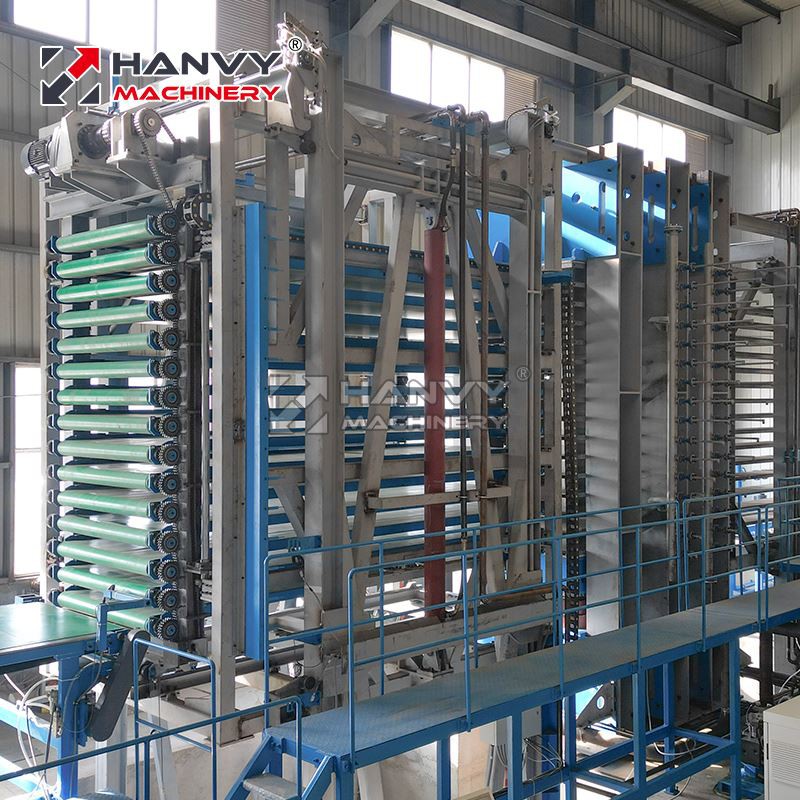
A short cycle melamine laminating hot press machine (also known as a fast-cycle decorative panel press or synchronized melamine board laminator) is the specialized secondary processing equipment used in plywood, MDF, and particleboard factories to thermocompress resin-impregnated decorative paper, phenolic film, or veneer overlays directly onto raw wood-based panels without wet liquid glue application.
Unlike conventional multi-daylight plywood hot presses that require 8 to 15 minutes of slow curing for thick structural billets, a short cycle press operates with a single opening under high thermal energy and extreme pressure, achieving complete resin cure and surface texturing in a rapid 15 to 35 second cycle.
Technical Specifications: Industrial Short Cycle Laminating Press Lines
Short cycle laminating lines are engineered as fully automated continuous systems consisting of hydraulic scissor lift infeed, vacuum suction sheet feeders, electrostatic dust cleaners, fast-charging belt loaders, high-pressure hot press, outfeed cooling conveyors, and automated edge trimming saws.
| Technical Parameter | Model HSL-1400T (Standard Commercial) | Model HSL-2000T (Deep Embossing / Heavy-Duty) | Model HSL-2800T (Synchronized Texture) |
|---|---|---|---|
| Nominal Pressing Force | 14,000 kN (1,400 Metric Tons) | 20,000 kN (2,000 Metric Tons) | 28,000 kN (2,800 Metric Tons) |
| Hot Platen Dimension | 1,400 x 2,600 mm (4x8 ft) | 1,400 x 2,600 mm / 1,400 x 3,050 mm | 1,400 x 2,900 mm / 2,050 x 3,050 mm |
| Specific Board Pressure | 3.5–4.5 MPa (500–650 PSI) | 5.0–6.5 MPa (725–940 PSI) | 7.0–9.0 MPa (Synchronized EIR) |
| Hot Platen Working Temp | 180°C–210°C (Thermal Oil) | 190°C–220°C (High-Flow Thermal Oil) | 195°C–225°C (Precision Dual Loop) |
| Press Closing Time | ≤ 1.2–1.5 seconds | ≤ 1.0–1.2 seconds | ≤ 0.8–1.0 seconds |
| Total Pressing Cycle Time | 25–40 seconds per panel | 20–30 seconds per panel | 18–28 seconds per panel |
| Main Hydraulic Cylinders | Φ320 mm x 6 Solid Forged Plungers | Φ360 mm x 8 Solid Forged Plungers | Φ400 mm x 8 Heavy Plungers |
| Heating Medium | High-temperature thermal oil boiler | High-temperature thermal oil boiler | Independent primary/secondary oil loops |
| Installed Electrical Power | 37 kW – 55 kW | 55 kW – 75 kW | 75 kW – 95 kW |
| Daily Output (3 Shifts) | 1,500 – 2,200 finished panels | 2,000 – 3,000 finished panels | 2,400 – 3,500 finished panels |
5 Critical Engineering Components for High-Yield Laminating
1. Solid-Forged Hydraulic Cylinders & Fast Pre-Fill Valves
Short cycle lamination demands rapid closing (under 1.2 seconds) to prevent melamine resin from pre-curing prematurely before full contact pressure is achieved.
- ✓Pre-Fill Gravity Valves: Oversized proportional pre-fill valves allow hydraulic fluid to surge by gravity into the cylinder barrels during rapid closing, switching to high-pressure radial piston pumps only at the final millisecond of contact.
2. High-Precision Solid Drilled Thermal Oil Platens
- ✓Temperature Uniformity ±1.5°C: Platens are gun-drilled from solid heavy steel plate with dual labyrinth flow channels. Rapid thermal oil circulation ensures zero cold spots across all four corners, preventing color shade variations across the finished board.
3. Chromium-Plated Stainless Steel Press Plates & Cushion Pads
- ✓Surface Textures: The texture of the board (high gloss, matte, suede, wood-grain ticking, or synchronized Embossed-in-Register EIR) is transferred directly from a specialized stainless steel press plate (hardness > 40 HRC).
- ✓High-Durability Cushion Pads: Placed between the hot platen and the texture press plate, multi-layer silicone/copper-wire cushion pads absorb minute panel thickness variations, guaranteeing 100% even pressure distribution.
4. Electrostatic Dust Removal & Antistatic Infeed Systems
A single microscopic speck of wood dust trapped between the melamine paper and core panel causes a visible bubble, white spot, or resin pop. The infeed conveyor incorporates rotating horsehair brushes paired with 25 kV ionization air bars to strip static electricity and vacuum away all particulate matter.
5. Automated High-Speed Charging Tray & Board Ejector
Mechanical clamp claws or continuous synchronous belt loaders advance the assembled panel and melamine film into the press in under 3.5 seconds, avoiding thermal pre-curing on the bottom sheet.
Economic Benefits: Why Adding a Short Cycle Press Boosts Mill Profits
For an existing plywood or panel manufacturing mill, installing a short cycle laminating line provides a dramatic boost to gross operating margins by transforming standard commodity substrate into high-value architectural panels.
Economic Value Addition & Cost-Benefit Analysis (Per 4x8 ft Panel)
| Operational Cost Component | Estimated Cost (USD) | Market Value & Revenue Impact | Added Value (USD) |
|---|---|---|---|
| Raw Commodity Core Panel | Baseline Substrate | Finished Melamine Decorative Panel | +6.00 to +14.00 Premium |
| Melamine Decorative Impregnated Paper | 1.10 – 1.40 | Direct Access to Premium Cabinet & Furniture Markets | High-Margin Demand |
| Thermal Oil Energy & Press Electricity | 0.35 – 0.50 | Scratch-Resistant, Waterproof & Stain-Proof Surface | Grade-A Architecture Spec |
| Labor & Overhead Allocation | 0.20 – 0.30 | Complete Avoidance of Low-End Commodity Board Price Wars | Stable Factory Profitability |
| Total Added Processing Cost | ~1.80 – 2.20 / panel | Net Gross Margin Increase | +35% to +55% Net Margin |
Frequently Asked Questions (FAQ)
What types of base panels can be processed in a short cycle hot press?
Short cycle presses can laminate standard commercial plywood, film-faced shuttering plywood, medium-density fiberboard (MDF), high-density fiberboard (HDF), particleboard (chipboard), and blockboard ranging in thickness from 3 mm to 35 mm.
What is the recommended pressing temperature and time for melamine paper?
For standard furniture-grade melamine impregnated paper on 16–18 mm core boards, the typical platen temperature is maintained between 190°C and 205°C, with a pressing duration of 22 to 30 seconds at a specific surface pressure of 3.8 to 4.5 MPa.
What causes surface hazing or white spots on laminated panels?
Surface hazing is primarily caused by: 1. Inadequate platen temperature (resin not fully polymerizing), 2. Low pressing pressure, 3. Excess moisture in the core panel (exceeding 8%–10% MC), or 4. Aged melamine paper whose volatile content has fallen below the usable threshold.
❓ Preguntas Frecuentes
Q:What types of base panels can be processed in a short cycle hot press?
Short cycle presses can laminate commercial plywood, film-faced plywood, MDF, HDF, particleboard, and blockboard ranging in thickness from 3 mm to 35 mm.
Q:What is the recommended pressing temperature and time for melamine paper?
For standard melamine paper on 16-18 mm boards, platen temperature is maintained between 190°C and 205°C, with a pressing duration of 22 to 30 seconds at 3.8 to 4.5 MPa.
Q:What causes surface hazing or white spots on laminated panels?
Surface hazing is caused by inadequate platen temperature, low pressing pressure, core panel moisture exceeding 8-10%, or aged melamine paper with low volatile content.
Equipo de Ingeniería de Hanvy Machinery
Diseñado con más de 30 años de experiencia en maquinaria para contrachapado. Más de 500 plantas llave en mano instaladas en 69 países.
Guías Industriales Recomendadas

Veneer Scarf Jointing vs. Core Composing: How to Produce Oversized & High-Strength Plywood Panels
Engineering comparison of veneer scarf jointing and core composing: 1:10 bevel geometry, longitudinal tensile strength, thermal thread composing, and machinery for container flooring and marine plywood.
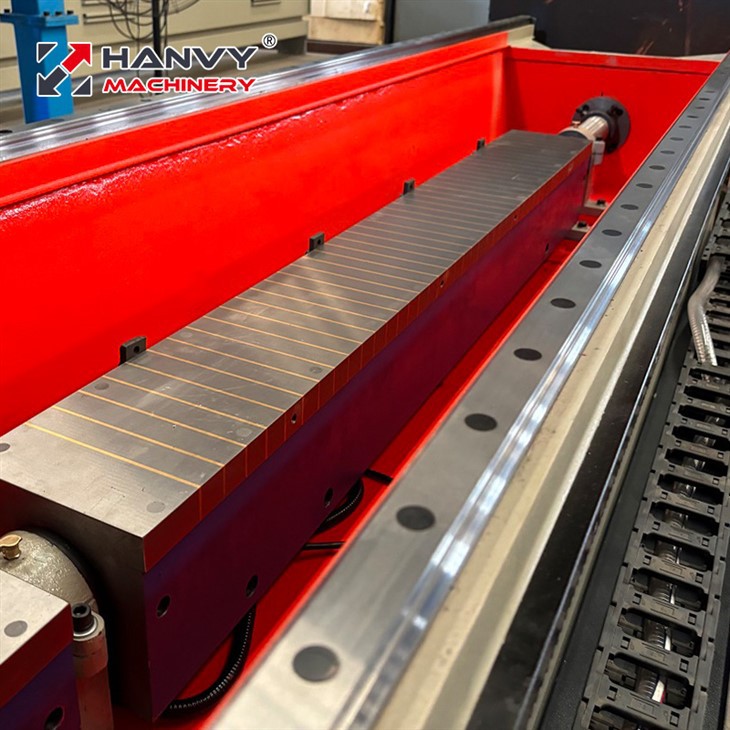
Troubleshooting Veneer Knife Grinding Defects: Edge Burning, Chatter Marks & Bowing Prevention
Engineering diagnostic guide for troubleshooting the 5 most critical veneer knife grinding failures: edge burning, chatter ripples, blade bowing, feathered burrs, and angle inconsistency.
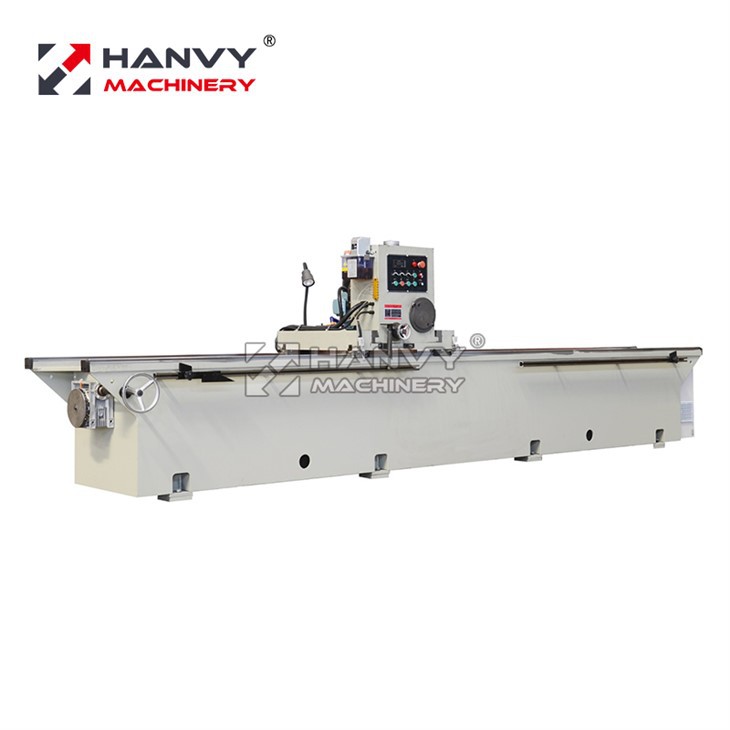
CNC Veneer Knife Grinder Selection & Maintenance: The Industrial Guide to Razor-Sharp Peeling Precision
Engineering selection guide for industrial veneer peeling knife grinders: electromagnetic chuck vs. mechanical beds, variable-speed traverse drives, CNC auto infeed cycles, and preventive maintenance SOP to achieve sub-micron blade straightness.