
Precio de Maquinaria para Fabricar Contrachapado en 2026: Desglose Completo de Costos
Guía de precios de maquinaria para contrachapado: rangos de costo para tornos desenrolladores, prensas en caliente, secadores y líneas completas llave en mano.

If you are planning a plywood project, the first question is almost always the same: how much does a plywood making machine cost? The short answer is that a single machine can cost anywhere from 5,000 to 120,000, while a complete automatic plywood production line typically lands between 500,000 and 800,000. The real answer depends on which machine you need, what capacity you want, and how much automation you buy.
In this guide we break down the plywood making machine price by equipment type, explain the seven factors that move the price up or down, and show you exactly what information to send suppliers so you get comparable, honest quotations.
Typical Plywood Making Machine Prices by Equipment Type
The table below shows current market price ranges for the main machines in a plywood plant. Ranges reflect standard 4x8 ft configurations from established Chinese manufacturers; premium brands and European equipment cost significantly more.
| Machine | Function in the line | Typical price range (USD) |
|---|---|---|
| Log cutting saw | Cross-cuts logs to peeling length | 8,000 – 20,000 |
| Log debarker / rounder | Removes bark and rounds the log | 5,000 – 25,000 |
| Spindleless veneer peeling machine (4–8 ft) | Peels core veneer down to a 40 mm core | 12,000 – 35,000 |
| Spindle veneer peeling lathe | Peels face veneer from large-diameter logs | 20,000 – 45,000 |
| Veneer dryer (roller / mesh type) | Dries veneer to 8–12% moisture | 40,000 – 120,000 |
| Glue spreader (single / double side) | Applies resin glue evenly | 4,000 – 15,000 |
| Core veneer composer / jointer | Assembles core veneer into blanks | 18,000 – 30,000 |
| Cold press / pre-press | Pre-compacts glued blanks | 8,000 – 25,000 |
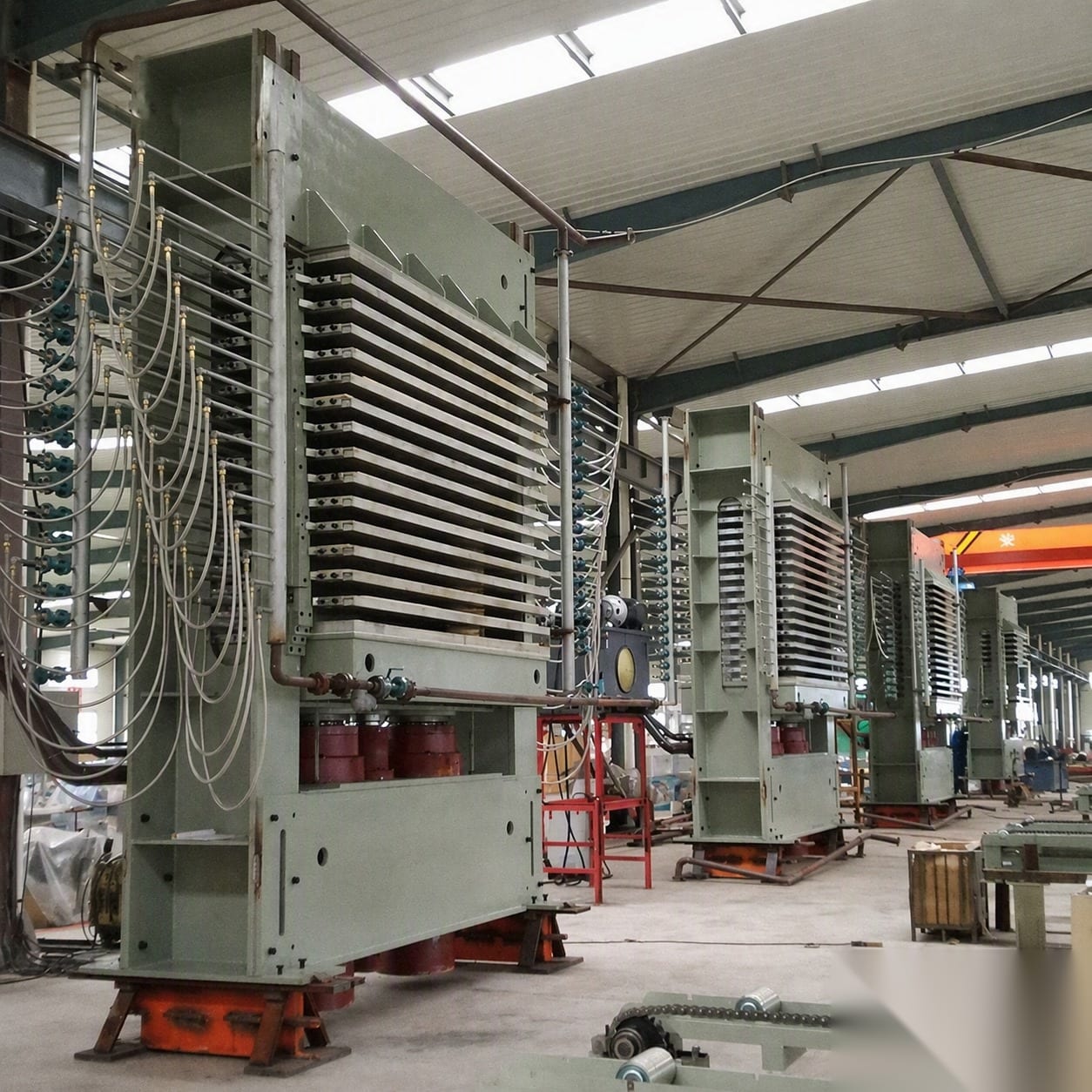
| Hot press (400T–1200T, 4x8 ft) | Cures the plywood panel | 35,000 – 95,000 |
| Edge trimming saw (double side) | Trims boards to final size | 15,000 – 30,000 |
| Wide belt sanding machine | Calibrates and polishes the surface | 10,000 – 40,000 |
| Film faced laminating line | Makes shuttering / formwork plywood | 60,000 – 150,000 |
| Complete semi-automatic line | Log to finished board, manual handling | 250,000 – 450,000 |
| Complete automatic turnkey line | Full automation, loading to stacking | 500,000 – 800,000+ |
The 7 Factors That Drive Plywood Machine Price
Two machines that look identical in a catalog can differ by 30–50% in price. Here is what you are actually paying for:
1. Platen and frame steel. Hot press platens should be made of high-strength steel (Q345B or better) at around 42 mm thickness. Thin or low-grade plates warp after a year of 25 MPa pressure cycles — the cheapest hot press is always the most expensive one.
2. Control system. A Siemens PLC with touchscreen HMI costs several times more than a generic controller, but it delivers stable temperature, pressure and cycle control, easier troubleshooting and cheaper spare parts worldwide.
3. Hydraulic components. Cylinder diameter, pump brand and valve blocks determine whether the press holds real tonnage. Ask for the cylinder count and diameter in writing — 2×φ380 mm main cylinders is common on a 600-ton class press.
4. Automation level. Manual loading costs almost nothing; a full hydraulic loader + unloader with automatic stackers can add 50,000–150,000 to a line, but cuts labor from 8–10 workers to 2–3 per shift.
5. Working size. Standard 4x8 ft (1220×2440 mm) machines are the price benchmark. 5x10 ft, extra-wide or extra-thick configurations increase frame mass and price quickly.
6. Heating method. Steam heating needs a boiler investment; thermal oil systems run cleaner and give more uniform platen temperature, usually at a moderate price premium; electric heating suits small lines only.
7. After-sales and installation. A supplier who flies engineers to your country for installation, commissioning and operator training costs more than a trader shipping crates. For heavy machinery this service is worth paying for.

Hidden Costs Nobody Puts in the Quotation
When budgeting a plywood plant, add roughly 20–35% on top of the equipment price for:
- ✓Ocean freight and inland transport (machines ship naked in 40HQ containers; a full line can fill 10–20 containers)
- ✓Customs duties and clearance in your country
- ✓Steam boiler or thermal oil heater for the hot press and dryer
- ✓Electrical installation, transformers and cabling (a full line can need 500–1000 kW installed power)
- ✓Plant civil works, foundation pits and steel platforms
- ✓First-year spare parts (peeling knives, saw blades, seals, hydraulic oil)
- ✓Commissioning engineer costs (flights, visa, accommodation) if not included
How to Get an Accurate Quote (Checklist)
Send suppliers this information and their quotations become directly comparable:
- 1Final board size (e.g. 1220×2440 mm, 9–18 mm thickness) and target capacity (m³/day or sheets/day)
- 2Raw material species (eucalyptus, pine, poplar, birch...) and max log diameter
- 3Power supply available (voltage, frequency) — 380V/50Hz is standard but many countries need 220V/60Hz or 415V
- 4Heating preference: steam, thermal oil or electric
- 5Automation preference: semi-automatic or fully automatic
- 6Destination port for a CIF price
- 7Whether you need installation, training and spare parts packages

Frequently Asked Questions About Plywood Machine Prices
How much does a full plywood production line cost?
A semi-automatic 4x8 ft line from a reputable Chinese manufacturer typically costs 250,000–450,000 for the equipment. A fully automatic turnkey line with loading, unloading and sorting runs 500,000–800,000, before freight, boiler and installation.
Which single plywood machine is the most expensive?
The veneer dryer and the hot press are usually the two largest investments. High-deck dryers (3–4 decks, 12+ sections) and 800T+ hot presses both commonly exceed 60,000–100,000.
Are used plywood machines worth buying?
They can save 30–50% upfront, but worn platens, leaking cylinders and obsolete controls often cost more in downtime and repairs than the discount. If you buy used, inspect the machine running, not parked.
Do prices include installation?
Usually not. Clarify whether the price is EXW, FOB or CIF, and whether the supplier provides engineers for installation and operator training — good manufacturers include this service for a negotiated fee.
Bottom Line
A plywood making machine price is really a question about configuration. Define your board size, capacity and automation level first, then compare suppliers on steel thickness, control brand, cylinder specs and after-sales — not on the bottom-line number alone.
Want a real quote for your project? Send us your target board size, capacity and location and our engineers will reply within 24 hours with a detailed plywood machine price list and line layout proposal.
Get a Free Quote · WhatsApp: +86 156 1079 1577 · Email: [email protected]
❓ Preguntas Frecuentes
Q:How much does a full plywood production line cost?
A semi-automatic 4x8 ft line from a reputable Chinese manufacturer typically costs $250,000–$450,000 for the equipment. A fully automatic turnkey line with loading, unloading and sorting runs $500,000–$800,000.
Q:Which single plywood machine is the most expensive?
The veneer dryer and the hot press are usually the two largest investments, commonly exceeding $60,000–$100,000 each.
Equipo de Ingeniería de Hanvy Machinery
Diseñado con más de 30 años de experiencia en maquinaria para contrachapado. Más de 500 plantas llave en mano instaladas en 69 países.
Guías Industriales Recomendadas

Línea de Desenrollo de Chapa sin Husillo: Comparativa 4 ft vs. 8 ft, Capacidad y Rentabilidad
Análisis económico y productivo para tornos de chapa de 4 y 8 pies: ahorro de hasta $990 por turno en madera y configuración de líneas continuas.

Secador de Rodillos vs. Malla: Costos Energéticos, Producción y Guía de Selección
Especificaciones y ventajas mecánicas de secadores Hanvy: rodillos sin costura de 100 mm, cojinetes de PTFE autolubricados y rendimiento por metro cúbico.
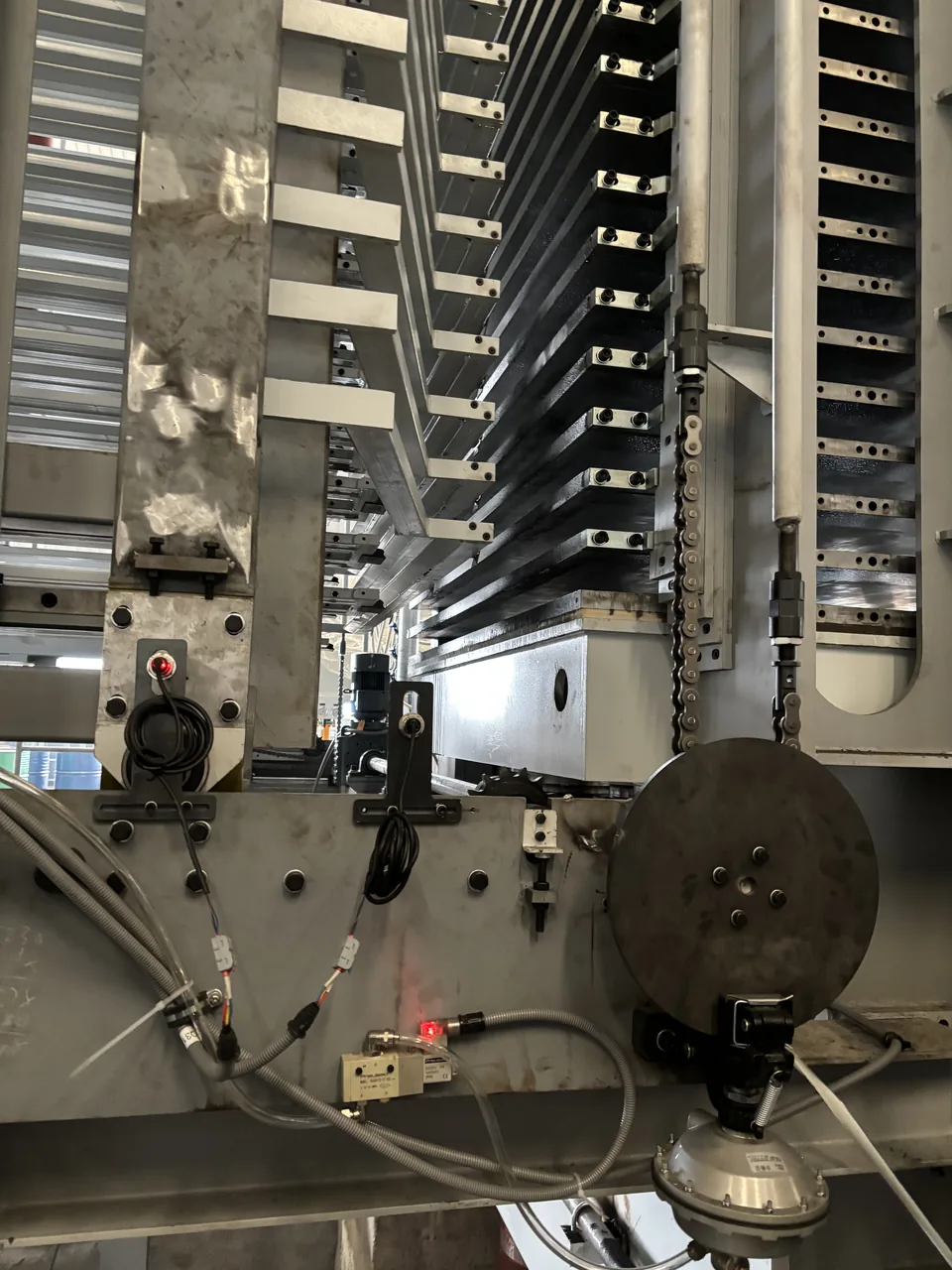
Prensa Hidráulica Automática de Contrachapado: Optimización de Ciclos y Curvas de Presión
Control avanzado de prensado en caliente: etapas de compresión, respiración para escape de vapor y garantía de resistencia mecánica según normas EN/ASTM.